

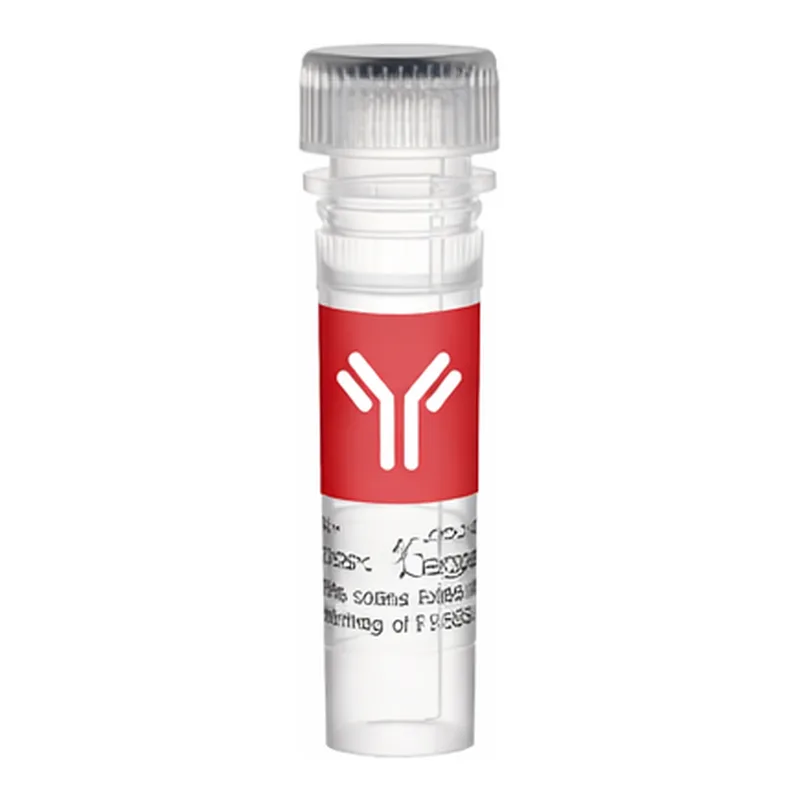
Thermo Fisher Scientific SEPT5 Polyclonal Antibody
Rabbit polyclonal antibody targeting human SEPT5 protein. Validated for WB and IHC applications. High specificity and affinity purified via antigen chromatography. Suitable for human and mouse samples. For research use only.
- 판매단위
- pk
카탈로그
1개 옵션 · 카탈로그 번호를 클릭하면 복사됩니다Thermo Fisher Scientific · Thermo Fisher Scientific SEPT5 Polyclonal Antibody
Applications
| Application | Tested Dilution |
|---|---|
| Western Blot (WB) | 1:500–1:3,000 |
| Immunohistochemistry (Paraffin) (IHC (P)) | 1:100–1:1,000 |
Product Specifications
| Property | Description |
|---|---|
| Species Reactivity | Human, Mouse |
| Host/Isotype | Rabbit / IgG |
| Class | Polyclonal |
| Type | Antibody |
| Immunogen | Recombinant fragment corresponding to amino acids 160–369 of Human SEPT5 |
| Conjugate | Unconjugated |
| Form | Liquid |
| Concentration | 0.21 mg/mL |
| Purification | Antigen affinity chromatography |
| Storage Buffer | 0.1M Tris glycine, pH 7, with 20% glycerol |
| Contains | 0.01% thimerosal |
| Storage Conditions | Store at 4°C short term. For long term, store at -20°C, avoiding freeze/thaw cycles. |
| Shipping Conditions | Wet ice |
| RRID | AB_2548686 |
Product Specific Information
- Recommended positive controls: A549, HeLa, HepG2, HCT116, mouse brain
- Predicted reactivity: Mouse (100%), Rat (99%), Xenopus laevis (94%), Chicken (95%), Bovine (100%)
- Store product as a concentrated solution. Centrifuge briefly prior to opening the vial.
Target Information
This gene belongs to the septin gene family of nucleotide-binding proteins, originally described in yeast as cell division cycle regulatory proteins. Septins are highly conserved across species and play a role in cytoskeletal organization. Disruption of septin function affects cytokinesis, leading to multinucleate or polyploid cells.
The SEPT5 gene is located on chromosome 22q11, a region associated with DiGeorge and velocardiofacial syndromes. A translocation involving the MLL gene and SEPT5 has been observed in acute myeloid leukemia.
Two transcripts (2.2 kb major and 3.5 kb minor) are produced due to alternative polyadenylation. An alternatively spliced transcript variant with a different 5′ end has also been identified but not fully characterized.
⚠ WARNING: This product can expose you to chemicals including mercury, known to the State of California to cause birth defects or other reproductive harm.
For more information, visit www.P65Warnings.ca.gov.
For Research Use Only. Not for use in diagnostic procedures. Not for resale without express authorization.
제품 이미지
Thermo Fisher Scientific 상품 둘러보기
전체보기
문의
0개 · 배송·재고 문의는 실시간 상담이 빠릅니다아직 등록된 문의가 없어요.