

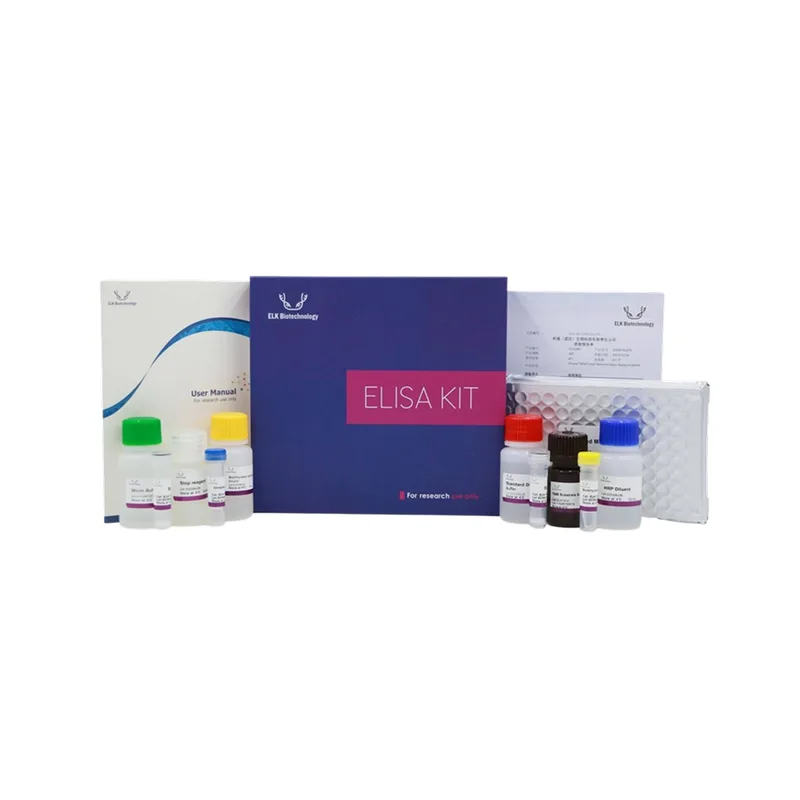
ELK Biotechnology Trk A (phospho Tyr680/Y681) rabbit pAb
Trk A (phospho Tyr680/Y681) rabbit polyclonal antibody로, 인간, 마우스, 랫트 시료에 반응합니다. WB 및 ELISA에 적합하며, 신경성장인자 수용체의 인산화 상태 분석에 유용합니다. 고순도 IgG 형식으로 -20°C에서 1년 보관 가능합니다.
- 판매단위
- pk
카탈로그
2개 옵션 · 카탈로그 번호를 클릭하면 복사됩니다ELK Biotechnology · ELK Biotechnology Trk A (phospho Tyr680/Y681) rabbit pAb
제품명
Trk A (phospho Tyr680/Y681) rabbit pAb
제품 정보
| 항목 | 내용 |
|---|---|
| Alternative Names | NTRK1; MTC; TRK; TRKA; High affinity nerve growth factor receptor; Neurotrophic tyrosine kinase receptor type 1; TRK1-transforming tyrosine kinase protein; Tropomyosin-related kinase A; Tyrosine kinase receptor; Tyrosine kinase receptor A |
| Applications | WB; ELISA |
| Recommended Dilutions | Western Blot: 1/500 - 1/2000 ELISA: 1/5000 Not yet tested in other applications |
| Immunogen | The antiserum was produced against synthesized peptide derived from human Trk A around the phosphorylation site of Tyr680 and Tyr681. AA range: 646–695 |
| Host | Rabbit |
| Storage | -20°C / 1 year |
| Clonality | Polyclonal |
| Isotype | IgG |
| Concentration | 1 mg/ml |
| Observed Band | 140–180 kDa |
| Gene ID (Human) | 4914 |
| Human Swiss-Prot No. | P04629 |
| Species Reactivity | Human; Mouse; Rat |
세포 내 위치
Cell membrane; Single-pass type I membrane protein.
Early endosome membrane; Single-pass type I membrane protein.
Late endosome membrane; Single-pass type I membrane protein.
Recycling endosome membrane; Single-pass type I membrane protein.
Rapidly internalized after NGF binding (PubMed:1281417).
Internalized to endosomes upon binding of NGF or NTF3 and further transported to the cell body via retrograde axonal transport.
Localized at cell membrane and early endosomes before nerve growth factor (NGF) stimulation.
Recruited to late endosomes after NGF stimulation.
Colocalized with RAPGEF2 at late endosomes.
배경(Background)
This gene encodes a member of the neurotrophic tyrosine kinase receptor (NTKR) family.
This kinase is a membrane-bound receptor that, upon neurotrophin binding, phosphorylates itself and members of the MAPK pathway.
The presence of this kinase leads to cell differentiation and may play a role in specifying sensory neuron subtypes.
Mutations in this gene have been associated with congenital insensitivity to pain, anhidrosis, self-mutilating behavior, mental retardation, and cancer.
Alternate transcriptional splice variants of this gene have been found, but only three have been characterized to date.
[provided by RefSeq, Jul 2008]
ELK Biotechnology 상품 둘러보기
전체보기
문의
0개 · 배송·재고 문의는 실시간 상담이 빠릅니다아직 등록된 문의가 없어요.