

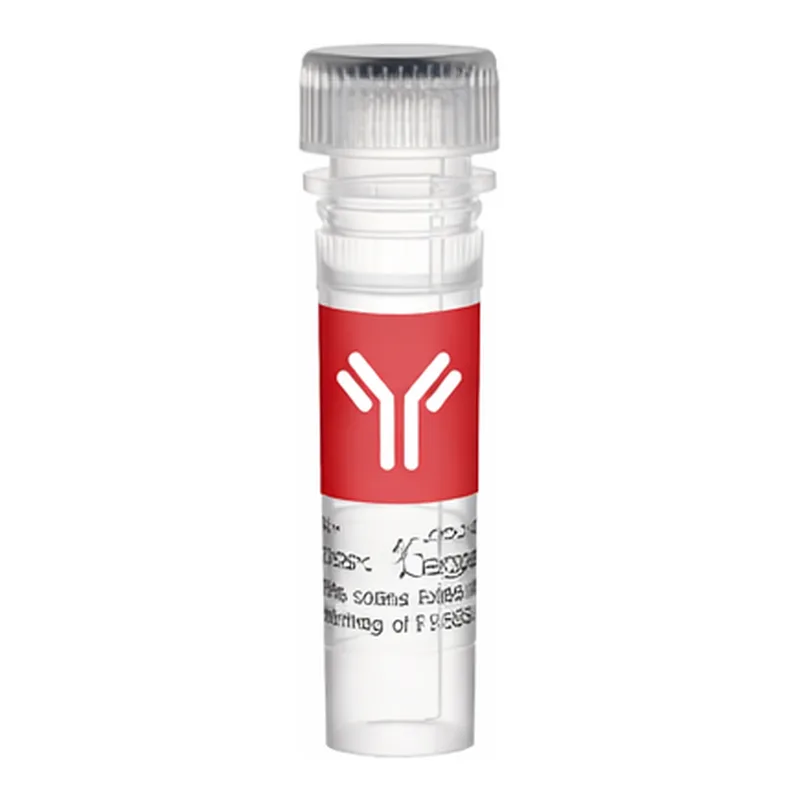
Thermo Fisher Scientific CD206 Monoclonal Antibody (MR5D3), Biotin
CD206 단백질을 인식하는 쥐 유래 단클론 항체로, Biotin으로 표지되어 있습니다. 면역조직화학(IHC), 동결절편, 유세포분석(Flow Cytometry)에 사용 가능하며, 단백질 G로 정제되었습니다. 4°C 단기 보관, -20°C 장기 보관 권장.
- 판매단위
- pk
카탈로그
1개 옵션 · 카탈로그 번호를 클릭하면 복사됩니다Thermo Fisher Scientific · Thermo Fisher Scientific CD206 Monoclonal Antibody (MR5D3), Biotin
Applications and Tested Dilution
| Application | Tested Dilution | Publications |
|---|---|---|
| Immunohistochemistry (IHC) | - | View 1 publication |
| Immunohistochemistry (Frozen) (IHC (F)) | Assay-dependent | - |
| Flow Cytometry (Flow) | Neat-1:10 | - |
Product Specifications
| 항목 | 내용 |
|---|---|
| Species Reactivity | Mouse |
| Published Species | Mouse |
| Host / Isotype | Rat / IgG2a |
| Class | Monoclonal |
| Type | Antibody |
| Clone | MR5D3 |
| Immunogen | Chimaeric CRD4-7-Fc protein |
| Conjugate | Biotin |
| Form | Liquid |
| Concentration | 0.1 mg/mL |
| Purification | Protein G |
| Storage Buffer | PBS with 1% BSA |
| Contains | 0.09% sodium azide |
| Storage Conditions | Store at 4°C short term. For long term storage, store at -20°C, avoiding freeze/thaw cycles. |
| Shipping Conditions | Ambient (domestic); Wet ice (international) |
| RRID | AB_2538347 |
Additional Formats
Product Specific Information
CD206 is expressed weakly at the cell surface, and staining may be increased following membrane permeabilization.
For FACS analysis, use 10 µL of the suggested working dilution to label 1×10⁶ cells in 100 µL.
Rat anti-mouse CD206 antibody, clone MR5D3, recognizes the mouse mannose receptor (CD206), a ~175 kDa type I membrane glycoprotein.
Target Information
CD206 (MSR, Mannose receptor, MRC1) is a 175 kDa transmembrane protein belonging to the group of pattern recognition receptors.
It is predominantly expressed in tissue macrophages, dendritic cells, a subpopulation of endothelial cells, and sperm cells.
CD206 plays roles in innate and adaptive immune responses, mediating recognition and uptake of macromolecules such as modified lipoproteins, AGEs, and amyloid β-protein (Aβ).
While normally involved in cell adhesion and host defense, CD206 has also been implicated in atherosclerosis and amyloid β deposition in Alzheimer’s disease.
Its gene encodes class A macrophage scavenger receptors (types 1, 2, and 3), generated by alternative splicing.
Types 1 and 2 mediate endocytosis of modified LDLs, while type 3 lacks this ability and can inhibit the function of the other isoforms, suggesting a regulatory mechanism.
CD206 dysfunction has been associated with diseases such as leprosy and Gaucher’s Disease.
For Research Use Only. Not for use in diagnostic procedures. Not for resale without express authorization.
Thermo Fisher Scientific 상품 둘러보기
전체보기
문의
0개 · 배송·재고 문의는 실시간 상담이 빠릅니다아직 등록된 문의가 없어요.