

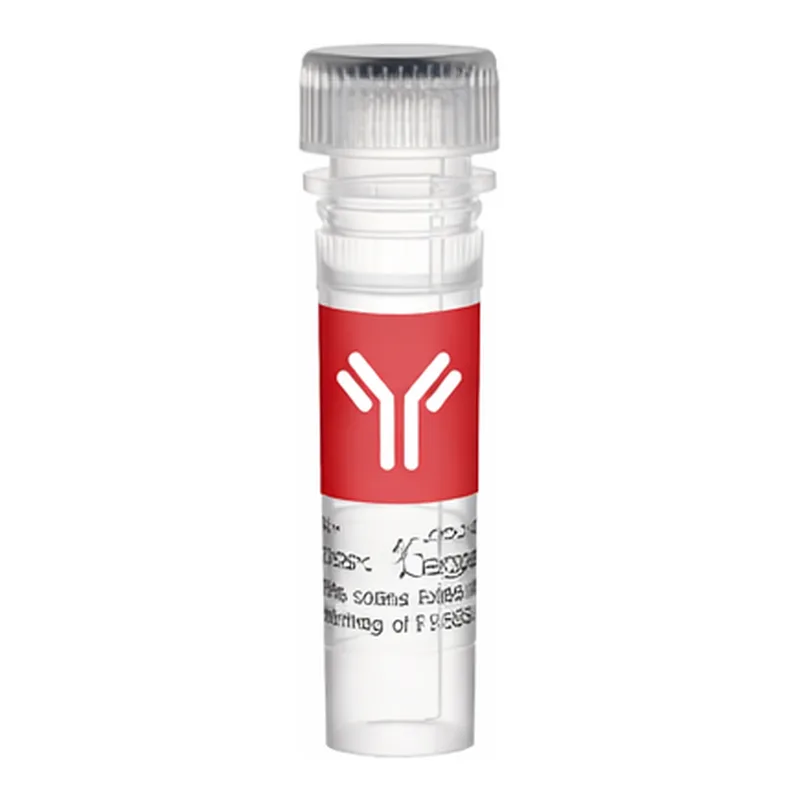
Thermo Fisher Scientific Human SPTLC2 Synthetic Peptide
인간 SPTLC2 단백질의 C-말단 15개 아미노산 서열을 기반으로 한 합성 펩타이드. 항체 PA5-21142의 블로킹 펩타이드로 사용 가능. 구형 지질 생합성 연구용. 정제된 액상 형태로 제공되며, -20°C에서 보관.
- 카테고리
- Protein
- 판매단위
- pk
카탈로그
1개 옵션 · 카탈로그 번호를 클릭하면 복사됩니다Thermo Fisher Scientific · Thermo Fisher Scientific Human SPTLC2 Synthetic Peptide
Applications
Control (Ctrl)
- Assay-dependent
Blocking Assay (BLOCK)
- Assay-dependent
Product Specifications
| 항목 | 내용 |
|---|---|
| Species Reactivity | Human |
| Class | Synthetic |
| Type | Peptide |
| Conjugate | Unconjugated |
| Form | Liquid |
| Concentration | 200 µg/mL |
| Purification | Purified |
| Storage Buffer | PBS, pH 7.2, with 0.1% BSA |
| Contains | 0.02% sodium azide |
| Storage Conditions | -20°C |
Product Specific Information
This peptide corresponds to 15 amino acids near the carboxy terminus of human SPT2.
PEP-1256 can be used as a blocking peptide with polyclonal antibody PA5-21142.
Target Information
Serine palmitoyltransferase (SPT), which consists of two different subunits, is the key enzyme in sphingolipid biosynthesis. It converts L-serine and palmitoyl-CoA to 3-oxosphinganine with pyridoxal 5'-phosphate as a cofactor.
SPT2 is the long chain base subunit 2 of mammalian serine palmitoyltransferase. SPT2 is catalytically active but requires its related protein SPT1 for stabilization and anchoring of the holoenzyme to the cytosolic face of the endoplasmic reticulum.
Mutations in the SPT2 gene can cause hereditary sensory and autonomic neuropathy type I (HSAN-I), resulting from a loss of SPT activity and accumulation of the atypical and neurotoxic sphingoid metabolite 1-deoxy-sphinganine.
For Research Use Only. Not for use in diagnostic procedures. Not for resale without express authorization.
Thermo Fisher Scientific 상품 둘러보기
전체보기
문의
0개 · 배송·재고 문의는 실시간 상담이 빠릅니다아직 등록된 문의가 없어요.