

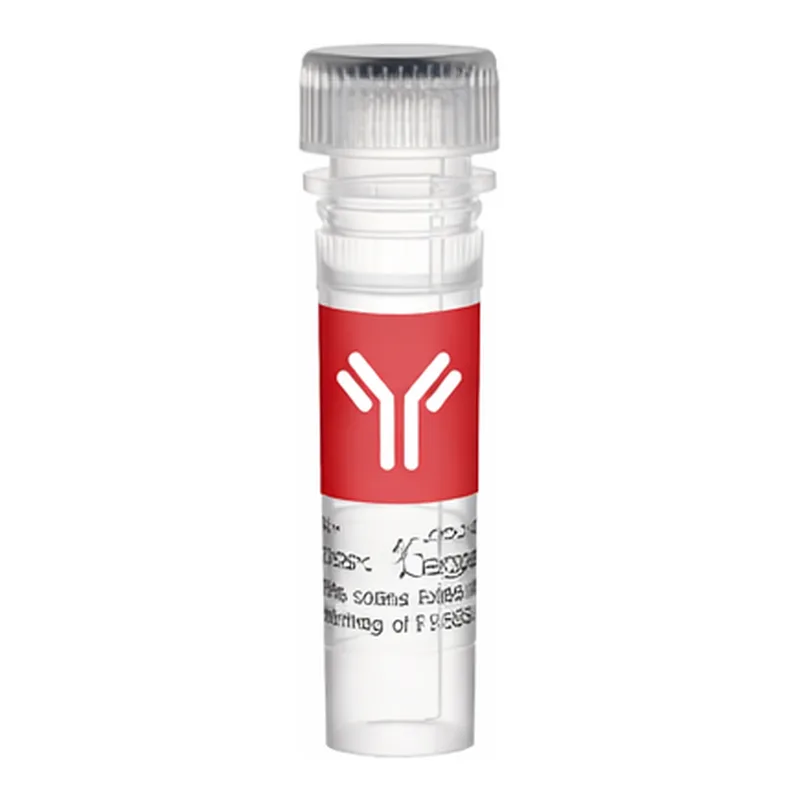
Thermo Fisher Scientific H1N1 Hemagglutinin 2 Polyclonal Antibody
Influenza A H1N1 Hemagglutinin 2 단백질을 인식하는 Rabbit Polyclonal 항체. WB, IHC, ICC, ELISA 등 다양한 응용에 적합. 고순도 Protein A 정제 및 안정한 glycerol 보존 포뮬레이션. 연구용으로만 사용 가능.
- 판매단위
- pk
카탈로그
1개 옵션 · 카탈로그 번호를 클릭하면 복사됩니다Thermo Fisher Scientific · Thermo Fisher Scientific H1N1 Hemagglutinin 2 Polyclonal Antibody
Applications and Tested Dilutions
| Application | Tested Dilution |
|---|---|
| Western Blot (WB) | 1:500–1:2,000 |
| Immunohistochemistry (Paraffin) (IHC-P) | 1:100–1:500 |
| Immunohistochemistry (Frozen) (IHC-F) | 1:100–1:500 |
| Immunocytochemistry (ICC/IF) | 1:50–1:200 |
| ELISA | 1:5,000–1:10,000 |
Product Specifications
| Specification | Detail |
|---|---|
| Species Reactivity | Virus |
| Host / Isotype | Rabbit / IgG |
| Class | Polyclonal |
| Type | Antibody |
| Immunogen | KLH-conjugated synthetic peptide derived from Influenza A Virus Hemagglutinin (strain swl A/California/04/2009 H1N1) |
| Conjugate | Unconjugated |
| Form | Liquid |
| Concentration | 1 mg/mL |
| Purification | Protein A |
| Storage Buffer | 0.01M TBS, pH 7.4, with 50% glycerol, 1% BSA |
| Contains | 0.02% ProClin 300 |
| Storage Conditions | -20°C |
| Shipping Conditions | Ambient (domestic); Wet ice (international) |
Target Information
Influenza A virus is a major public health threat. Novel influenza virus strains caused by genetic drift and viral recombination emerge periodically to which humans have little or no immunity, resulting in devastating pandemics. Influenza A can exist in a variety of animals; however, it is in birds that all subtypes can be found.
These subtypes are classified based on the combination of the virus coat glycoproteins hemagglutinin (HA) and neuraminidase (NA) subtypes. HA interacts with cell surface proteins containing oligosaccharides with terminal sialyl residues, binding to sialic acid-containing receptors on the cell surface and mediating viral attachment.
This attachment induces virion internalization through both clathrin-dependent and clathrin-independent pathways. HA plays a major role in host range restriction and virulence. As a Class I viral fusion protein, it mediates penetration of the virus into the cell cytoplasm by fusing the viral envelope with the endosomal membrane. Low pH in endosomes triggers conformational changes in HA2, releasing the fusion peptide and enabling membrane fusion. Several trimers are required to form a competent fusion pore.
Target: Influenza A Virus (strain swl A/California/04/2009 H1N1).
For Research Use Only. Not for use in diagnostic procedures. Not for resale without express authorization.
Thermo Fisher Scientific 상품 둘러보기
전체보기
문의
0개 · 배송·재고 문의는 실시간 상담이 빠릅니다아직 등록된 문의가 없어요.