

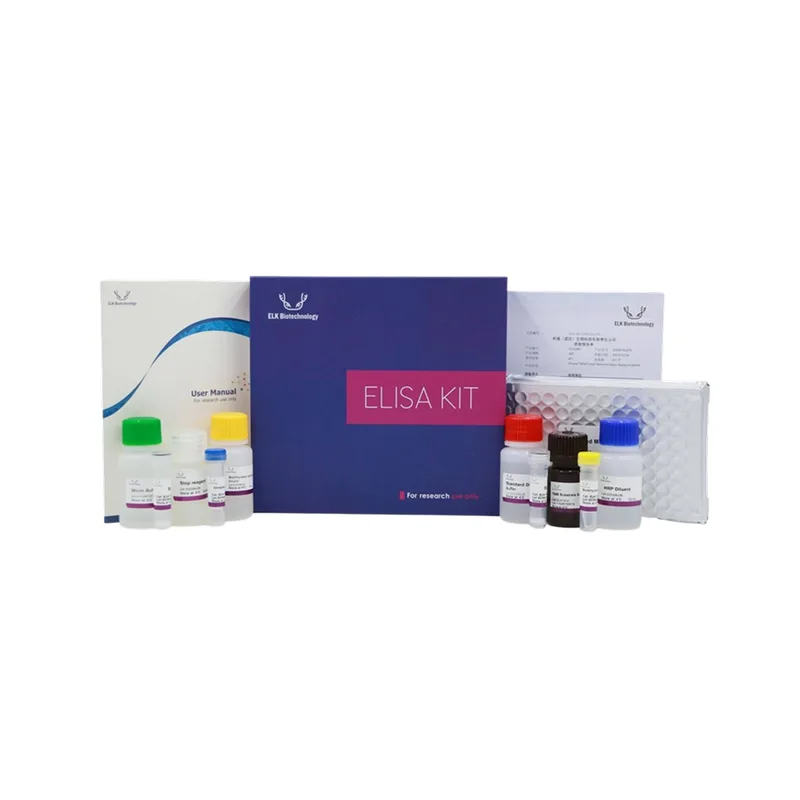
ELK Biotechnology Ref-1 rabbit pAb
Ref-1(APEX1) 단백질을 인식하는 토끼 폴리클로날 항체로 WB, IHC, IF, ELISA에 사용 가능. 사람, 생쥐, 랫트 반응성. 핵 및 세포질 단백질 검출에 적합하며, -20°C에서 1년 보관 가능.
- 판매단위
- pk
카탈로그
2개 옵션 · 카탈로그 번호를 클릭하면 복사됩니다ELK Biotechnology · ELK Biotechnology Ref-1 rabbit pAb
ELK Biotechnology Ref-1 rabbit pAb
제품 정보
| 항목 | 내용 |
|---|---|
| Product name | Ref-1 rabbit pAb |
| Alternative Names | APEX1; APE; APE1; APEX; APX; HAP1; REF1; DNA-(apurinic or apyrimidinic site) lyase; APEX nuclease; APEN; Apurinic-apyrimidinic endonuclease 1; AP endonuclease 1; APE-1; REF-1; Redox factor-1 |
| Applications | WB; IHC; IF; ELISA |
| Recommended Dilutions | Western Blot: 1/500 - 1/2000 IHC-p: 1/100 - 1/300 ELISA: 1/20000 Not yet tested in other applications. |
| Immunogen | The antiserum was produced against synthesized peptide derived from human APEX1. AA range: 191-240 |
| Host | Rabbit |
| Storage | -20°C / 1 year |
| Clonality | Polyclonal |
| Isotype | IgG |
| Concentration | 1 mg/ml |
| Observed Band | 34 kD |
| GeneID (Human) | 328 |
| Human Swiss-Prot No. | P27695 |
| Species Reactivity | Human; Mouse; Rat |
Cellular Localization
Nucleus, nucleolus, nucleus speckle, endoplasmic reticulum, cytoplasm. Detected in the cytoplasm of B-cells stimulated to switch (By similarity). Colocalized with SIRT1 in the nucleus and YBX1 in nuclear speckles after genotoxic stress. Together with OGG1, recruited to nuclear speckles in UVA-irradiated cells. Colocalized with nucleolin and NPM1 in the nucleolus. Its nucleolar localization is cell cycle dependent and requires active rRNA transcription. Colocalized with calreticulin in the endoplasmic reticulum. Translocation from the nucleus to the cytoplasm is stimulated in presence of nitric oxide (NO) and functions in a CRM1-dependent manner, possibly as a consequence of demasking a nuclear export signal (amino acid position 64-80). S-nitrosylation at Cys-93 and related modifications regulate localization.
Background
Apurinic/apyrimidinic (AP) sites occur frequently in DNA molecules by spontaneous hydrolysis, DNA damaging agents, or DNA glycosylases that remove specific abnormal bases. AP sites are pre-mutagenic lesions that can prevent normal DNA replication, so cells contain systems to identify and repair such sites. Class II AP endonucleases cleave the phosphodiester backbone 5′ to the AP site. This gene encodes the major AP endonuclease in human cells. Splice variants have been found for this gene; all encode the same protein. (Provided by RefSeq, Jul 2008)
ELK Biotechnology 상품 둘러보기
전체보기
문의
0개 · 배송·재고 문의는 실시간 상담이 빠릅니다아직 등록된 문의가 없어요.