

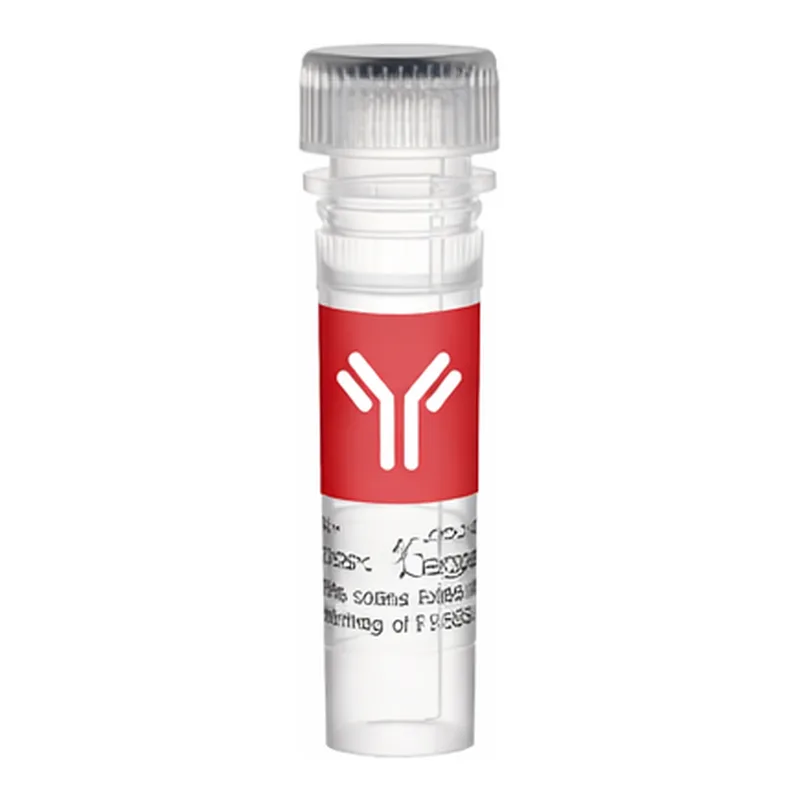
Thermo Fisher Scientific Proteasome 20S C2 Polyclonal Antibody
Proteasome 20S C2 단백질을 인식하는 Rabbit Polyclonal 항체로, Western blot 및 IHC(P) 응용에 적합합니다. Human, Mouse, Rat 반응성이 있으며 Protein A로 정제되었습니다. 연구용으로 세포 단백질 분해 관련 연구에 활용 가능합니다.
- 판매단위
- pk
카탈로그
1개 옵션 · 카탈로그 번호를 클릭하면 복사됩니다Thermo Fisher Scientific · Thermo Fisher Scientific Proteasome 20S C2 Polyclonal Antibody
Applications
Western Blot (WB)
- Tested Dilution: Assay-dependent
Immunohistochemistry (Paraffin) (IHC (P))
- Tested Dilution: Assay-dependent
Product Specifications
| 항목 | 내용 |
|---|---|
| Species Reactivity | Human, Mouse, Rat |
| Host / Isotype | Rabbit / IgG |
| Class | Polyclonal |
| Type | Antibody |
| Immunogen | KLH conjugated synthetic peptide derived from human Proteasome 20S C2 |
| Conjugate | Unconjugated |
| Form | Liquid |
| Concentration | 1 mg/mL |
| Purification | Protein A |
| Storage Buffer | 0.01M TBS, pH 7.4, with 50% glycerol, 1% BSA |
| Contains | 0.02% ProClin 300 |
| Storage Conditions | -20°C |
| Shipping Conditions | Ambient (domestic); Wet ice (international) |
Target Information
Proteolytic degradation is essential for maintaining proper levels of short-lived and regulatory proteins involved in metabolism, stress response, antigen presentation, receptor modulation, cell cycle regulation, transcription, and signaling.
The ubiquitin-proteasome pathway is responsible for degrading most cytosolic and nuclear proteins in eukaryotic cells, while others are degraded via the vacuolar pathway involving endosomes, lysosomes, and the endoplasmic reticulum.
The 26S proteasome is an ATP-dependent, multisubunit (~31 subunits) molecular complex with a molecular weight of approximately 2.5 MDa. It consists of a 20S proteolytic core complex capped by one or two 19S regulatory subunit complexes. The 19S subunits recognize ubiquitinated proteins and facilitate their unfolding and translocation into the 20S core for degradation.
An enzymatic cascade mediates the attachment of multiple ubiquitin molecules to lysine residues on target proteins. Defects in the ubiquitin-proteasome pathway are associated with several genetic diseases, including cystic fibrosis, Angelman’s syndrome, and Liddle syndrome.
For Research Use Only. Not for use in diagnostic procedures. Not for resale without express authorization.
Thermo Fisher Scientific 상품 둘러보기
전체보기
문의
0개 · 배송·재고 문의는 실시간 상담이 빠릅니다아직 등록된 문의가 없어요.