

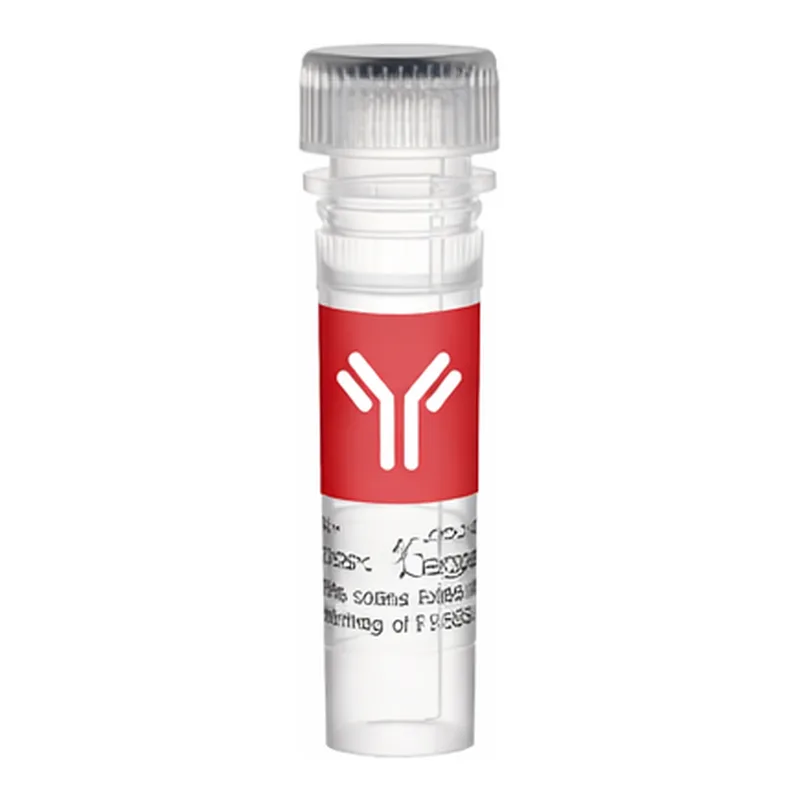
Thermo Fisher Scientific CD44 Monoclonal Antibody (H3)
인간 CD44 단백질을 인식하는 마우스 단클론 항체(H3 클론). Western blot, IHC(P), Flow Cytometry에 적합. 세포 접착, 이동, 림프구 활성화 연구에 활용 가능. 비결합형 액상 항체로 Protein G 정제, -20°C 보관.
- 판매단위
- pk
카탈로그
1개 옵션 · 카탈로그 번호를 클릭하면 복사됩니다Thermo Fisher Scientific · Thermo Fisher Scientific CD44 Monoclonal Antibody (H3)
Applications and Tested Dilution
| Application | Tested Dilution |
|---|---|
| Western Blot (WB) | 1:200–1:2,000 |
| Immunohistochemistry (Paraffin) (IHC (P)) | 1:25 |
| Flow Cytometry (Flow) | 1:20–1:100 |
Product Specifications
| 항목 | 내용 |
|---|---|
| Species Reactivity | Human |
| Host / Isotype | Mouse / IgG2a, kappa |
| Class | Monoclonal |
| Type | Antibody |
| Clone | H3 |
| Immunogen | This CD44 monoclonal antibody is generated from mouse immunized with CD44 recombinant protein. |
| Conjugate | Unconjugated |
| Form | Liquid |
| Concentration | 0.5 mg/mL |
| Purification | Protein G |
| Storage Buffer | TBS, pH 7.4, with 40% glycerol, 1% BSA |
| Contains | 0.02% ProClin 300 |
| Storage Conditions | -20°C |
| Shipping Conditions | Ambient (domestic); Wet ice (international) |
Target Information
CD44 cell surface antigen is a 100 kDa type I transmembrane glycoprotein widely expressed on human leukocytes, white matter of the brain, and certain epithelial cells of the intestine and breast. Several isoforms of CD44 exist, including the predominant CD44H isoform detected in many normal tissues.
CD44 functions as a receptor for hyaluronic acid (HA) and is involved in cell-cell interactions, adhesion, and migration. It participates in various cellular functions such as lymphocyte activation, recirculation, and homing. CD44 expression may be upregulated in certain carcinomas and is thought to be associated with metastatic potential.
It is expressed in hematopoietic and non-hematopoietic cells, epithelial tissues, and filopodia of cultured keratinocytes. Bone marrow myeloid cells and memory T cells express high levels of CD44, while peripheral B and T cells can upregulate CD44 expression in response to stimulation. The CD44 gene undergoes complex alternative splicing, generating multiple functionally distinct isoforms. Alternative splicing contributes to the structural and functional diversity of CD44. Diseases associated with CD44 dysfunction include superficial keratitis and lichen sclerosus, and CD44 may also be related to tumor metastasis formation.
For Research Use Only. Not for use in diagnostic procedures. Not for resale without express authorization.
Thermo Fisher Scientific 상품 둘러보기
전체보기
문의
0개 · 배송·재고 문의는 실시간 상담이 빠릅니다아직 등록된 문의가 없어요.