

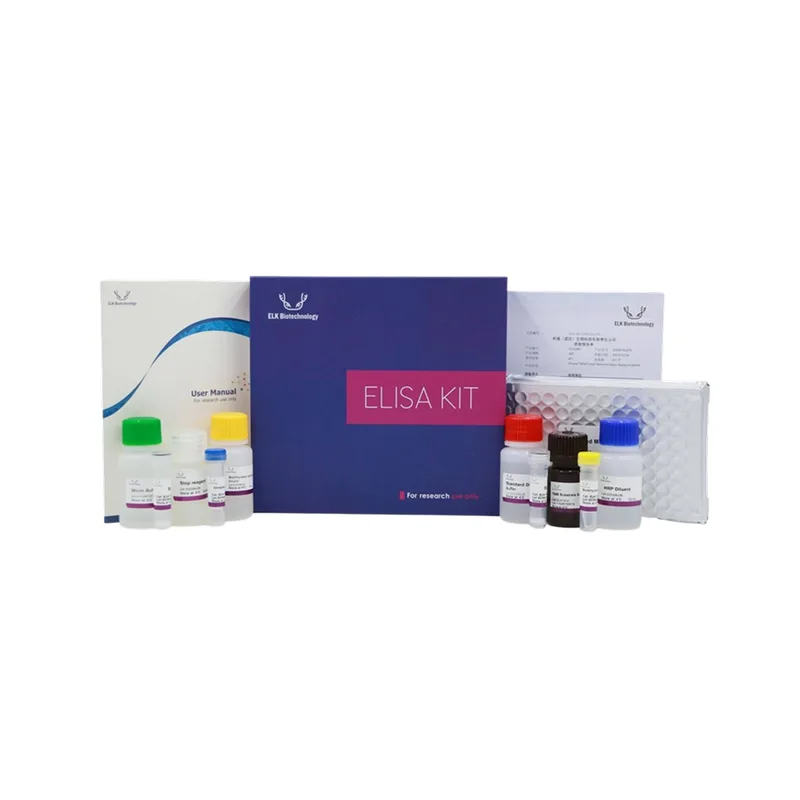
ELK Biotechnology SMAD7 rabbit pAb
SMAD7 단백질을 인식하는 토끼 폴리클로날 항체로, WB 및 ELISA에 사용 가능. 인간 단백질 유래 펩타이드로 면역화됨. 세포 내 위치 연구 및 TGF-β 신호전달 관련 연구에 적합. -20°C에서 1년 보관 가능.
- 판매단위
- pk
카탈로그
2개 옵션 · 카탈로그 번호를 클릭하면 복사됩니다ELK Biotechnology · ELK Biotechnology SMAD7 rabbit pAb
제품명
SMAD7 rabbit pAb
제품 개요
SMAD7 단백질을 인식하는 토끼 폴리클로날 항체입니다. 인간 단백질 일부 영역에서 합성된 펩타이드를 면역원으로 사용하였으며, 주로 Western Blot(WB) 및 ELISA 실험에 적합합니다.
제품 사양
| 항목 | 내용 |
|---|---|
| Applications | WB; ELISA |
| Recommended Dilutions | WB 1:500–2000, ELISA 1:5000–20000 |
| Immunogen | Synthesized peptide derived from part region of human protein |
| Host | Rabbit |
| Storage | -20°C / 1 year |
| Clonality | Polyclonal |
| Isotype | IgG |
| Concentration | 1 mg/ml |
| Observed Band | 46 kD |
| Gene ID (Human) | 4092 |
| Human Swiss-Prot No. | O15105 |
| Species Reactivity | Human; Mouse; Rat; Goat |
| Cellular Localization | Nucleus, Cytoplasm. Interaction with NEDD4L or RNF111 induces translocation from the nucleus to the cytoplasm (PubMed:16601693). TGF-beta stimulates its translocation from the nucleus to the cytoplasm. PDPK1 inhibits this translocation in response to TGF-beta (PubMed:17327236). |
Background
The protein encoded by this gene is a nuclear protein that binds the E3 ubiquitin ligase SMURF2. Upon binding, this complex translocates to the cytoplasm, where it interacts with TGF-beta receptor type-1 (TGFBR1), leading to the degradation of both the encoded protein and TGFBR1. Expression of this gene is induced by TGFBR1. Variations in this gene are a cause of susceptibility to colorectal cancer type 3 (CRCS3). Several transcript variants encoding different isoforms have been found for this gene. [provided by RefSeq, Jun 2010]
ELK Biotechnology 상품 둘러보기
전체보기
문의
0개 · 배송·재고 문의는 실시간 상담이 빠릅니다아직 등록된 문의가 없어요.