

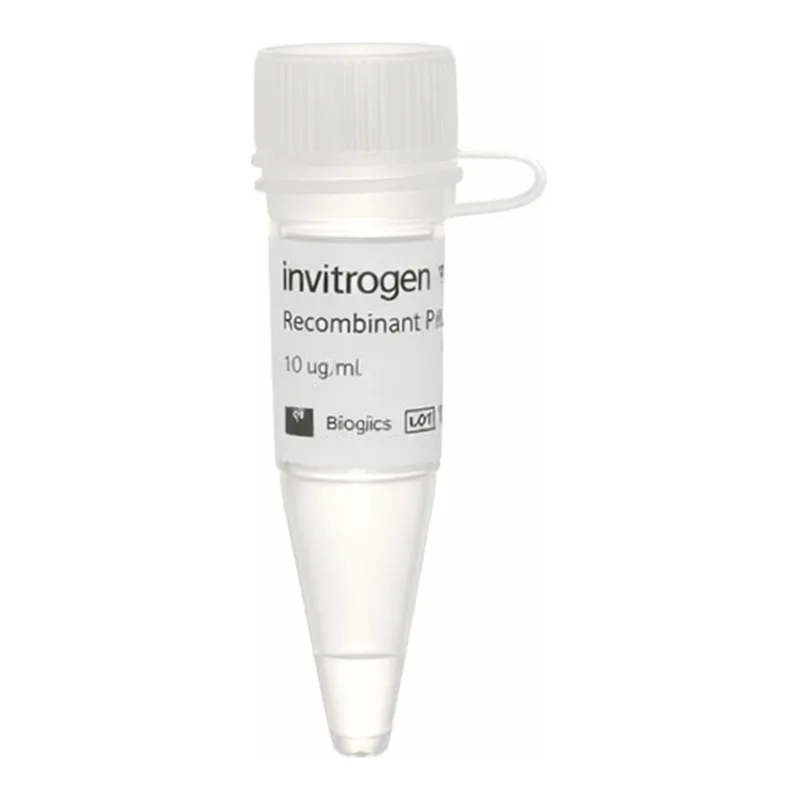
Thermo Fisher Scientific Human PPARD, Ligand Binding Domain, GST Tag Recombinant Protein
Recombinant human PPARD ligand binding domain (aa 165–441) with GST tag, expressed in E. coli. Ideal for ligand binding and coregulator displacement assays. Purified protein supplied in proprietary buffer, stored at -80°C, shipped on dry ice.
- 카테고리
- Protein
- 판매단위
- pk
카탈로그
1개 옵션 · 카탈로그 번호를 클릭하면 복사됩니다Thermo Fisher Scientific · Thermo Fisher Scientific Human PPARD, Ligand Binding Domain, GST Tag Recombinant Protein
Applications
- Ligand Binding Assay (LBA)
Tested Dilution: Assay-dependent
Product Specifications
| 항목 | 내용 |
|---|---|
| Species | Human |
| Expression System | E. coli |
| Amino Acid Sequence | 165–441 |
| Tag | GST-tag |
| Class | Recombinant |
| Type | Protein |
| Conjugate | Unconjugated |
| Form | Liquid |
| Concentration | See Label |
| Purification | Purified |
| Storage Buffer | Proprietary buffer |
| Contains | No preservative |
| Storage Conditions | -80°C, Avoid Freeze/Thaw Cycles |
| Shipping Conditions | Dry ice |
Product Specific Information
Peroxisome Proliferator Activated Receptor delta, Ligand Binding Domain (PPARδ-LBD) is a 59.90 kDa recombinant human protein (amino acids 165–441) expressed as a GST-tagged fusion protein in E. coli cells.
PPARδ-LBD was expressed and purified in the absence of exogenous ligands, making it ideal for ligand binding and coregulator displacement studies.
Protein Form: Recombinant, Ligand Binding Domain
Target Information
The PPARD gene encodes a member of the peroxisome proliferator-activated receptor (PPAR) family, which are nuclear hormone receptors that regulate peroxisome proliferation and various metabolic processes.
PPARs are involved in biological pathways related to diabetes, obesity, atherosclerosis, and cancer.
This protein acts as a potent inhibitor of ligand-induced transcription activity of PPARα and PPARγ and may function as an integrator of transcription repression and nuclear receptor signaling.
Elevated expression of this gene is observed in colorectal cancer cells and can be repressed by adenomatosis polyposis coli (APC), a tumor suppressor protein associated with the APC/β-catenin pathway.
Knockout studies in mice suggest roles in myelination of the corpus callosum, lipid metabolism, and epidermal cell proliferation.
For Research Use Only. Not for use in diagnostic procedures. Not for resale without express authorization.
Thermo Fisher Scientific 상품 둘러보기
전체보기

문의
0개 · 배송·재고 문의는 실시간 상담이 빠릅니다아직 등록된 문의가 없어요.