

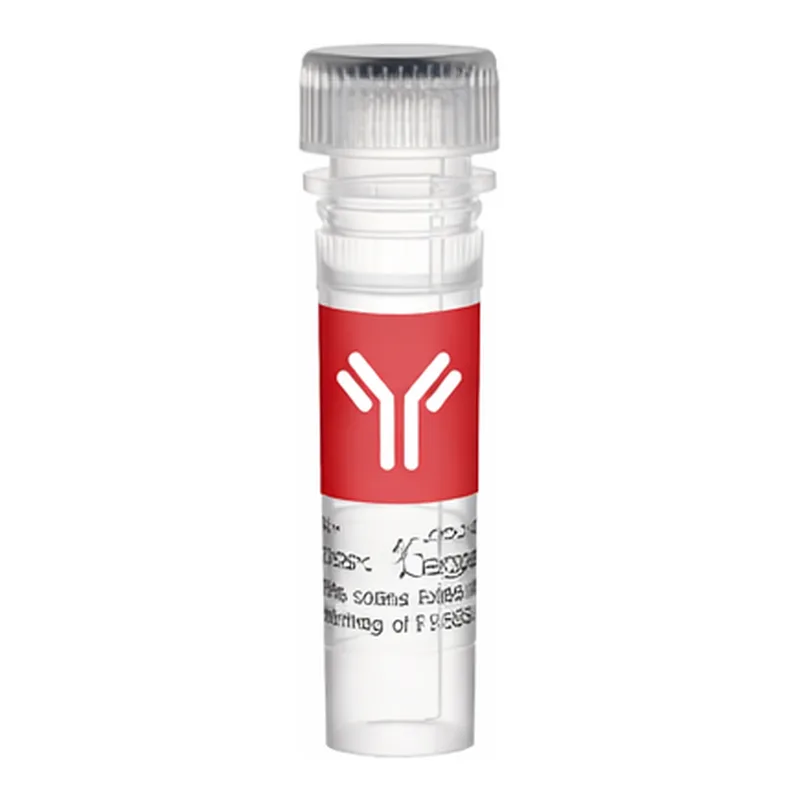
Thermo Fisher Scientific ADAMTSL1 Polyclonal Antibody
Thermo Fisher Scientific의 ADAMTSL1 폴리클로날 항체는 인간 단백질에 반응하며 Western blot 및 IHC(P) 실험에 적합합니다. 항원 친화 크로마토그래피로 정제된 액상 제품으로, 장기 보관 시 -20°C에서 안정적으로 유지됩니다. 연구용으로만 사용됩니다.
- 카탈로그번호
- PA563442
- 판매단위
- pk
카탈로그
1개 옵션 · 카탈로그 번호를 클릭하면 복사됩니다Thermo Fisher Scientific · Thermo Fisher Scientific ADAMTSL1 Polyclonal Antibody
Applications
| Application | Tested Dilution |
|---|---|
| Western Blot (WB) | 0.04–0.4 µg/mL |
| Immunohistochemistry (Paraffin) (IHC (P)) | 1:200–1:500 |
Product Specifications
| 항목 | 내용 |
|---|---|
| Species Reactivity | Human |
| Host / Isotype | Rabbit / IgG |
| Class | Polyclonal |
| Type | Antibody |
| Immunogen | Recombinant protein corresponding to Human ADAMTSL1. Recombinant protein control fragment (Product #RP-89737). |
| Conjugate | Unconjugated |
| Form | Liquid |
| Concentration | 0.2 mg/mL |
| Purification | Antigen affinity chromatography |
| Storage Buffer | PBS, pH 7.2, with 40% glycerol |
| Contains | 0.02% sodium azide |
| Storage Conditions | Store at 4°C short term. For long term storage, store at -20°C, avoiding freeze/thaw cycles. |
| Shipping Conditions | Wet ice |
| RRID | AB_2637673 |
Product Specific Information
Immunogen sequence:
QVPTQLEDIR ALLAATGPNL PSVLTSPLGT QLVLDPGNSA LLGCPIKGHP VPNITWFHGG QPIVTATGLT HHILAAGQIL QVANLSGGSQ GEFSCLAQNE AGVLMQKASL VIQDYWWSVD RLATCS
Highest antigen sequence identity to the following orthologs:
- Mouse: 90%
- Rat: 89%
Target Information
Punctin (ADAMTSL-1) is a secreted molecule expressed in adult skeletal muscle. It resembles members of the ADAMTS family of proteases and contains four thrombospondin type I repeats. Human punctin cleaves aggrecan and is classified as an aggrecanase. Each domain has an even number of cysteine residues, suggesting internal disulfide bonds and independently folded domains.
For Research Use Only. Not for use in diagnostic procedures. Not for resale without express authorization.
제품 이미지
Thermo Fisher Scientific 상품 둘러보기
전체보기
문의
0개 · 배송·재고 문의는 실시간 상담이 빠릅니다아직 등록된 문의가 없어요.