

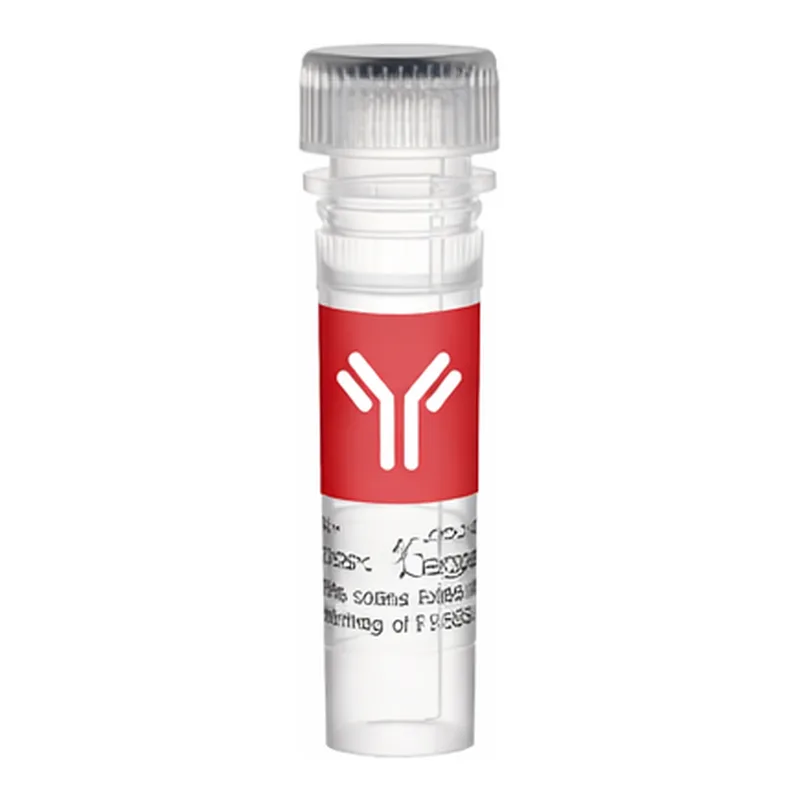
Thermo Fisher Scientific PDCD6 Monoclonal Antibody (2B4)
PDCD6 단백질을 인식하는 Mouse IgG2a 형 단클론 항체로, Western blot 및 ELISA에 적합합니다. 인간 시료에 반응하며, 비결합형 액상 형태로 제공됩니다. 연구용으로만 사용되며, -20°C에서 보관합니다.
- 카탈로그번호
- H00010016-M01A
- 판매단위
- pk
카탈로그
1개 옵션 · 카탈로그 번호를 클릭하면 복사됩니다Thermo Fisher Scientific · Thermo Fisher Scientific PDCD6 Monoclonal Antibody (2B4)
Applications
Western Blot (WB)
- Tested Dilution: 1:500–1:1,000
ELISA
- Tested Dilution: 10 µg/mL
Product Specifications
| 항목 | 내용 |
|---|---|
| Species Reactivity | Human |
| Host / Isotype | Mouse / IgG2a, kappa |
| Class | Monoclonal |
| Type | Antibody |
| Clone | 2B4 |
| Immunogen | PDCD6 (AAH12384.1, 92 a.a. approximately 191 a.a) partial recombinant protein with GST tag (MW of GST tag alone: 26 kDa) |
| Conjugate | Unconjugated |
| Form | Liquid |
| Concentration | See Label |
| Storage Buffer | Ascites |
| Contains | No preservative |
| Storage Conditions | -20°C, Avoid Freeze/Thaw Cycles |
| Shipping Conditions | Ambient (domestic); Wet ice (international) |
Product Specific Information
Sequence of this protein is as follows:
ITDWQNVFRT YDRDNSGMID KNELKQALSG FGYRLSDQFH DILIRKFDRQ GRGQIAFDDF IQGCIVLQRL TDIFRRYDTD QDGWIQVSYE QYLSMVFSIV
Target Information
An increased intracellular Ca²⁺ concentration induces apoptotic cell death. Transiently elevated Ca²⁺ concentrations are required for glucocorticoid-mediated and T cell receptor-mediated pathways, leading to T cell apoptosis.
ALG-2 (apoptosis-linked gene 2) is a Ca²⁺-binding protein that participates in regulatory events occurring late in the apoptotic program, where several death signals converge. ALG-2 is expressed in normal brain and more abundantly in ischemic brain.
The ALG-2 protein contains five EF-hand-like motifs and shares homology with members of the penta EF-hand family, including Calpain small subunits sorcin and Grancalcin.
For Research Use Only. Not for use in diagnostic procedures. Not for resale without express authorization.
Thermo Fisher Scientific 상품 둘러보기
전체보기
문의
0개 · 배송·재고 문의는 실시간 상담이 빠릅니다아직 등록된 문의가 없어요.