

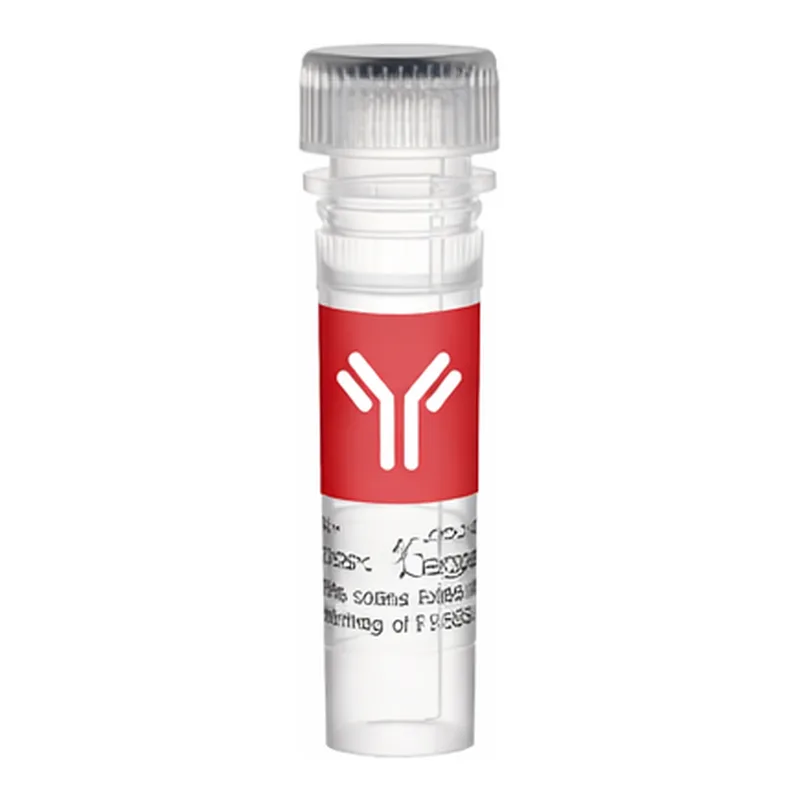
Thermo Fisher Scientific Human FABP5 (E-FABP) Recombinant Protein
Recombinant human FABP5(E-FABP) protein with N-terminal His-tag for use as a positive control in immunological assays. Expressed in E. coli, purified to >95% by SDS-PAGE. Supplied as liquid form, 1.25 mg/mL in Tris-HCl buffer with 50% glycerol. For res...
- 카테고리
- Protein
- 판매단위
- pk
카탈로그
1개 옵션 · 카탈로그 번호를 클릭하면 복사됩니다Thermo Fisher Scientific · Thermo Fisher Scientific Human FABP5 (E-FABP) Recombinant Protein
Thermo Fisher Scientific Human FABP5 (E-FABP) Recombinant Protein
Applications
- Western Blot (WB): Assay-dependent
- Control (Ctrl): Assay-dependent
Product Specifications
| 항목 | 내용 |
|---|---|
| Species | Human |
| Expression System | E. coli |
| Amino Acid Sequence | Met1–Glu135 containing an N-terminal His-tag |
| Tag | His-tag |
| Class | Recombinant |
| Type | Protein |
| Purity | >95%, by SDS-PAGE under reducing conditions |
| Conjugate | Unconjugated |
| Form | Liquid |
| Concentration | 1.25 mg/mL |
| Purification | Purified |
| Storage Buffer | 20 mM Tris-HCl, pH 8, with 50% glycerol |
| Contains | No preservative |
| Storage Conditions | -20°C, Avoid Freeze/Thaw Cycles |
| Shipping Conditions | Wet ice |
Product Specific Information
This product contains purified recombinant human epidermal FABP protein with an N-terminal hexahistidine tag.
It may be used as a positive control in various immunological assays.
Target Information
FABP5 (fatty acid binding protein 5, psoriasis-associated) is encoded by the FABP5 gene, also known as PAFABP, EFABP, E-FABP, KFABP, PA-FABP, and Epidermal-type fatty acid-binding protein.
FABP5 belongs to a family of small, highly conserved cytoplasmic proteins that bind long-chain fatty acids and other hydrophobic ligands.
- The PAFABP cDNA encodes a 135-amino acid protein with a molecular weight of approximately 15,164 Da.
- This gene encodes the fatty acid-binding protein found in epidermal cells and was first identified as upregulated in psoriasis tissue.
- FABPs are involved in fatty acid uptake, transport, and metabolism.
- Kaczocha et al. (2009) identified FABP5 and FABP7 as cytosolic proteins that transport AEA from the plasma membrane to subcellular fatty acid amide hydrolase, where it is hydrolyzed and inactivated. FABP3 did not exhibit this transport function.
For Research Use Only. Not for use in diagnostic procedures. Not for resale without express authorization.
Thermo Fisher Scientific 상품 둘러보기
전체보기
문의
0개 · 배송·재고 문의는 실시간 상담이 빠릅니다아직 등록된 문의가 없어요.