

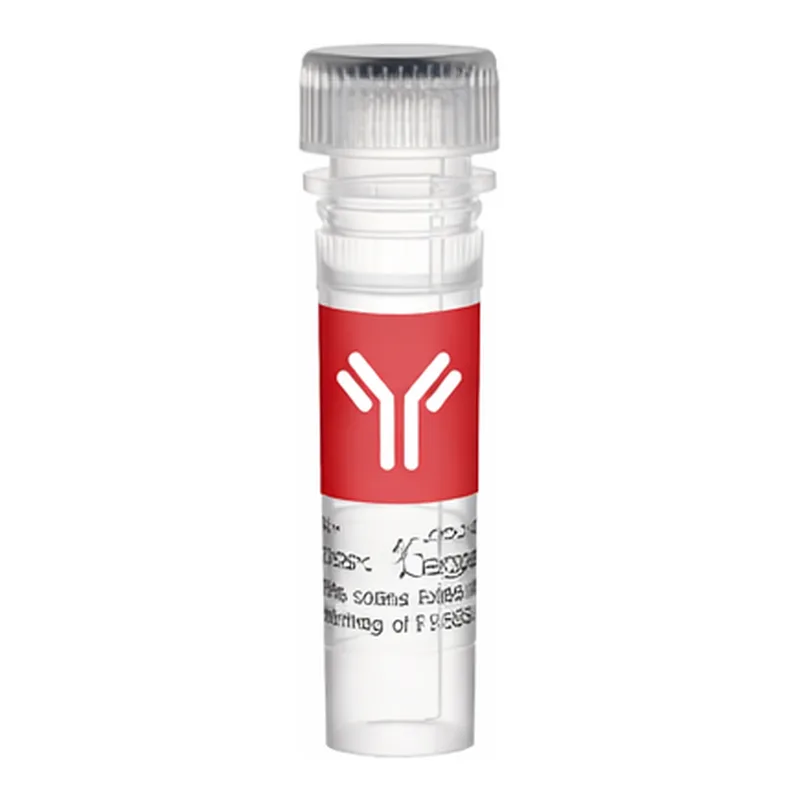
Thermo Fisher Scientific CCDC155 Polyclonal Antibody
인간 CCDC155 단백질을 인식하는 Rabbit Polyclonal 항체. Western blot에 최적화되어 있으며, C-terminal 합성 펩타이드를 면역원으로 제작됨. 액상 형태로 제공되며, -20°C에서 보관 권장. 연구용으로만 사용 가능.
- 판매단위
- pk
카탈로그
1개 옵션 · 카탈로그 번호를 클릭하면 복사됩니다Thermo Fisher Scientific · Thermo Fisher Scientific CCDC155 Polyclonal Antibody
Applications and Tested Dilution
| Application | Tested Dilution |
|---|---|
| Western Blot (WB) | 1 µg/mL |
Product Specifications
| 항목 | 내용 |
|---|---|
| Species Reactivity | Human |
| Host / Isotype | Rabbit / IgG |
| Class | Polyclonal |
| Type | Antibody |
| Immunogen | Synthetic peptide directed towards the C-terminal of human CCDC155 (aa 404–453) |
| Conjugate | Unconjugated |
| Form | Liquid |
| Concentration | 0.5 mg/mL |
| Purification | Affinity Chromatography |
| Storage Buffer | PBS with 2% sucrose |
| Contains | 0.09% sodium azide |
| Storage Conditions | -20°C, Avoid Freeze/Thaw Cycles |
| Shipping Conditions | Wet ice |
| RRID | AB_2606662 |
Product Specific Information
- Peptide sequence: VIHETSEETE FPSEAPAGGQ RNFQGEPAHP EEGRKEPSMW LTRREEEEDA
- Sequence homology: Cow: 77%; Human: 100%
Target Information
As a component of the LINC (Linker of Nucleoskeleton and Cytoskeleton) complex, CCDC155 is involved in connecting the nuclear lamina and cytoskeleton. The LINC complex is essential for transmitting mechanical forces across the nuclear envelope and for nuclear positioning.
CCDC155 is required for telomere attachment to the nuclear envelope during meiotic prophase and for telomere movements mediated by the SUN1/2:KASH5 LINC complex. It plays a critical role in homolog pairing during meiosis in spermatocytes and oocytes, essential for gametogenesis. Additionally, it recruits cytoplasmic dynein to telomere attachment sites and is involved in meiotic resumption and spindle formation in oocytes.
[UniProt]
For Research Use Only.
Not for use in diagnostic procedures.
Not for resale without express authorization.
Thermo Fisher Scientific 상품 둘러보기
전체보기
문의
0개 · 배송·재고 문의는 실시간 상담이 빠릅니다아직 등록된 문의가 없어요.