

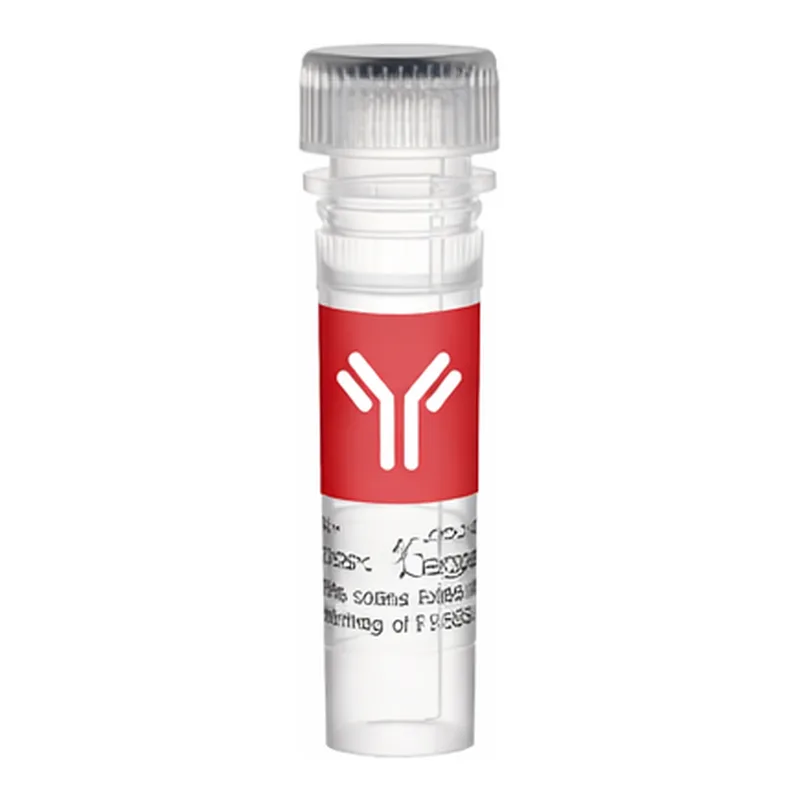
Thermo Fisher Scientific SEC16A Polyclonal Antibody
Thermo Fisher Scientific SEC16A Polyclonal Antibody는 인간 SEC16A 단백질을 인식하는 rabbit IgG 기반 항체입니다. Western blot, IHC, ICC/IF 등 다양한 응용에 적합하며, 높은 특이성과 항원 친화 정제 방식으로 제조되었습니다. 연구용으로만 사용 가능합니다.
- 카탈로그번호
- PA552182
- 판매단위
- pk
카탈로그
1개 옵션 · 카탈로그 번호를 클릭하면 복사됩니다Thermo Fisher Scientific · Thermo Fisher Scientific SEC16A Polyclonal Antibody
Applications
| Application | Tested Dilution | Publications |
|---|---|---|
| Western Blot (WB) | 0.04–0.4 µg/mL | - |
| Immunohistochemistry (Paraffin) (IHC (P)) | 1:50–1:200 | - |
| Immunocytochemistry (ICC/IF) | 0.25–2 µg/mL | - |
Product Specifications
| 항목 | 내용 |
|---|---|
| Species Reactivity | Human |
| Host/Isotype | Rabbit / IgG |
| Class | Polyclonal |
| Type | Antibody |
| Immunogen | Recombinant protein corresponding to Human SEC16A. Recombinant protein control fragment (Product #RP-89209). |
| Conjugate | Unconjugated |
| Form | Liquid |
| Concentration | 0.1 mg/mL |
| Purification | Antigen affinity chromatography |
| Storage buffer | PBS, pH 7.2, with 40% glycerol |
| Contains | 0.02% sodium azide |
| Storage conditions | Store at 4°C short term. For long term storage, store at -20°C, avoiding freeze/thaw cycles. |
| Shipping conditions | Wet ice |
| RRID | AB_2647072 |
Product Specific Information
Immunogen sequence:
PLPIPSNLFV PTPDAEEPQL PDGTGREGPA AARGLANPEP APEPKAPGDL PAAGGPPSGA MPFYNPAQ
Highest antigen sequence identity to the following orthologs:
Mouse - 46%, Rat - 47%.
Target Information
DNA methylation, or the addition of methyl groups to cytosine bases in the dinucleotide CpG, is imperative to proper development and regulates gene expression. The methylation pattern involves the enzymatic processes of methylation and demethylation. The demethylation enzyme was recently found to be a mammalian protein, which exhibits demethylase activity associated to a methyl-CpG-binding domain (MBD). The enzyme is able to revert methylated cytosine bases to cytosines within the particular dinucleotide sequence mdCpdG by catalyzing the cleaving of the methyl group as methanol. MeCP2 and MBD1 (PCM1) are first found to repress transcription by binding specifically to methylated DNA. MBD2 and MBD4 (also known as MED1) were later found to colocalize with foci of heavily methylated satellite DNA and believed to mediate the biological functions of the methylation signal. Surprisingly, MBD3 does not bind methylated DNA both in vivo and in vitro. MBD1, MBD2, MBD3, and MBD4 are found to be expressed in somatic tissues, but the expression of MBD1 and MBD2 is reduced or absent in embryonic stem cells, which are known to be deficient in MeCP1 activity. MBD4 have homology to bacterial base excision repair DNA N-glycosylases/lyases. In some microsatellite unstable tumors MBD4 is mutated at an exonic polynucleotide tract.
For Research Use Only. Not for use in diagnostic procedures. Not for resale without express authorization.
Thermo Fisher Scientific 상품 둘러보기
전체보기
문의
0개 · 배송·재고 문의는 실시간 상담이 빠릅니다아직 등록된 문의가 없어요.