

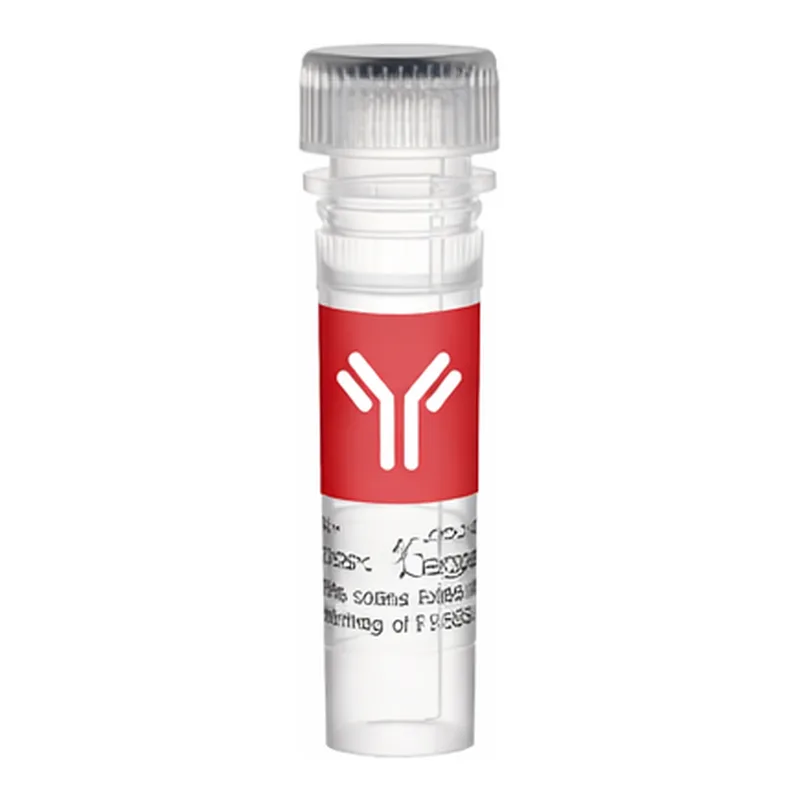
Thermo Fisher Scientific GFAP Polyclonal Antibody, Biotin
GFAP 단백질 검출용 바이오틴 결합 폴리클로날 항체로, 인간·마우스·랫트 시료에 반응. Western blot, IHC, ELISA, IP 등 다양한 응용 가능. 고순도 친화 크로마토그래피 정제 및 안정적 액상 형태로 제공.
- 판매단위
- pk
카탈로그
1개 옵션 · 카탈로그 번호를 클릭하면 복사됩니다Thermo Fisher Scientific · Thermo Fisher Scientific GFAP Polyclonal Antibody, Biotin
Thermo Fisher Scientific GFAP Polyclonal Antibody, Biotin
Applications and Tested Dilution
| Application | Tested Dilution |
|---|---|
| Western Blot (WB) | 1:500–1:1,000 |
| Immunohistochemistry (IHC) | 1:50–1:250 |
| ELISA | 1:10,000 |
| Immunoprecipitation (IP) | 1:50–1:250 |
Product Specifications
| Specification | Description |
|---|---|
| Species Reactivity | Human, Mouse, Rat |
| Host / Isotype | Rabbit / IgG |
| Class | Polyclonal |
| Type | Antibody |
| Immunogen | Synthetic peptide within amino acid region 50–100 of human glial fibrillary acidic protein (GFAP) |
| Conjugate | Biotin |
| Form | Liquid |
| Concentration | 0.5–1.5 mg/mL |
| Purification | Affinity chromatography |
| Storage Buffer | Proprietary buffer, pH 7.4–7.8, with 0.5% BSA, 30% glycerol |
| Contains | 0.02% sodium azide |
| Storage Conditions | −20°C |
| Shipping Conditions | Ambient (domestic); Wet ice (international) |
Target Information
GFAP (Glial fibrillary acidic protein) is a member of the class III intermediate filament protein family. It is heavily and specifically expressed in astrocytes and certain astroglia of the central nervous system, in satellite cells of peripheral ganglia, and in non-myelinating Schwann cells of peripheral nerves. Neural stem cells also strongly express GFAP.
Antibodies to GFAP are useful as markers of astrocytic cells and are heavily expressed in many types of brain tumors derived from astrocytic cells. GFAP is also found in the lens epithelium, Kupffer cells of the liver, certain salivary tumor cells, and has been reported in erythrocytes.
GFAP serves as a marker to distinguish astrocytes from other glial cells during development. Mutations in this gene cause Alexander disease, a rare disorder of astrocytes in the central nervous system. Alternative splicing of the GFAP gene results in multiple transcript variants encoding distinct isoforms.
Notice
For Research Use Only. Not for use in diagnostic procedures. Not for resale without express authorization.
Thermo Fisher Scientific 상품 둘러보기
전체보기
문의
0개 · 배송·재고 문의는 실시간 상담이 빠릅니다아직 등록된 문의가 없어요.