

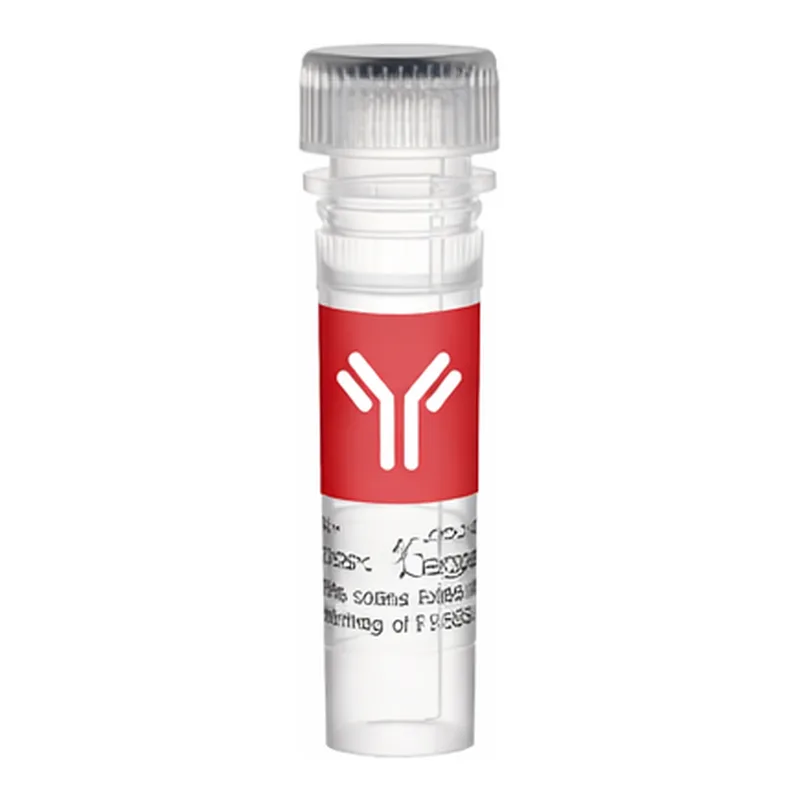
Thermo Fisher Scientific CRYAA Monoclonal Antibody (OTI2H2), TrueMAB
Human CRYAA 단백질을 인식하는 Mouse monoclonal antibody로 Western blot에 적합. Affinity chromatography로 정제된 액상형 항체이며, PBS/BSA/glycerol buffer에 보존. -20°C에서 보관, 연구용으로만 사용 가능.
- 판매단위
- pk
카탈로그
1개 옵션 · 카탈로그 번호를 클릭하면 복사됩니다Thermo Fisher Scientific · Thermo Fisher Scientific CRYAA Monoclonal Antibody (OTI2H2), TrueMAB
Applications
- Western Blot (WB): Tested dilution 1:2,000
Product Specifications
| 항목 | 내용 |
|---|---|
| Species Reactivity | Human |
| Host / Isotype | Mouse / IgG1 |
| Class | Monoclonal |
| Type | Antibody |
| Clone | OTI2H2 |
| Immunogen | Full length human recombinant protein of human CRYAA produced in HEK293T cell |
| Conjugate | Unconjugated |
| Form | Liquid |
| Concentration | 1 mg/mL |
| Purification | Affinity chromatography |
| Storage Buffer | PBS with 1% BSA, 50% glycerol |
| Contains | 0.02% sodium azide |
| Storage Conditions | -20°C, Avoid Freeze/Thaw Cycles |
| Shipping Conditions | Ambient (domestic); Wet ice (international) |
Target Information
Lens proteins consist almost entirely of crystallins (about 95%), which are also found in vertebrate skeletal muscle tissue. In the lens, their structural function is to maintain the proper refractive index.
The mammalian lens contains three major classes of crystallins: alpha, beta, and gamma.
Alpha-crystallin, the largest, is composed of two primary gene products—alpha-A and alpha-B.
Alpha-crystallin comprises about 40% of total lens protein and functions as a molecular chaperone to prevent aggregate formation that could lead to cataract development.
Phosphorylation states of alpha-crystallin may respond to cellular stress and play a role in protein maintenance.
Alpha-B crystallin has been associated with Alexander’s disease, where it accumulates in brain cells of affected individuals.
For Research Use Only. Not for use in diagnostic procedures. Not for resale without express authorization.
Thermo Fisher Scientific 상품 둘러보기
전체보기
문의
0개 · 배송·재고 문의는 실시간 상담이 빠릅니다아직 등록된 문의가 없어요.