

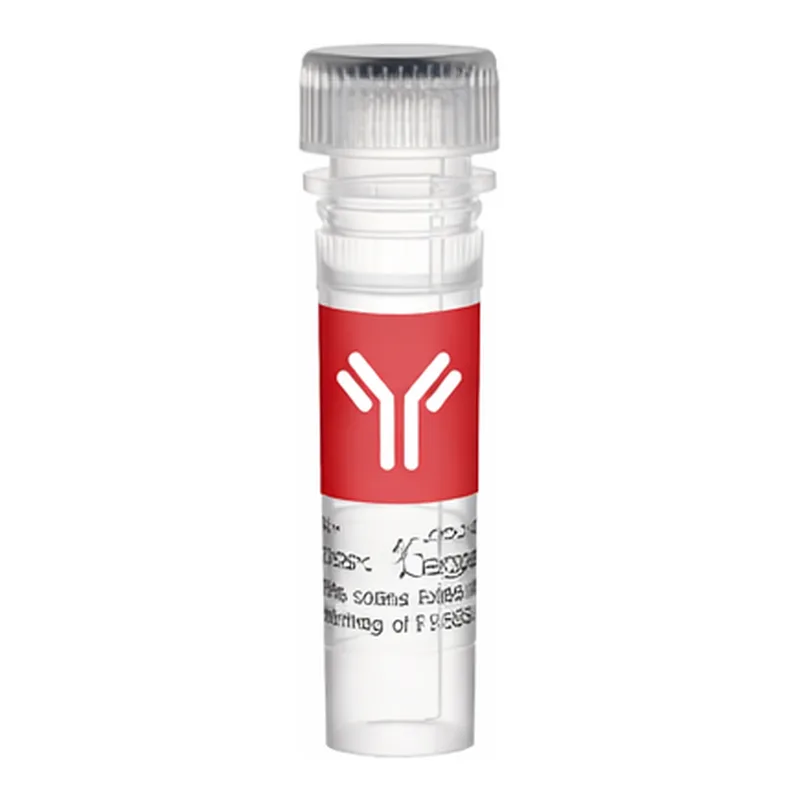
Thermo Fisher Scientific ApoB-100 Polyclonal Antibody, Agarose
Thermo Fisher Scientific의 ApoB-100 Polyclonal Antibody는 인간 ApoB-100 단백질을 인식하는 염소 유래 IgG 항체로, agarose 결합 형태입니다. Western blot 및 Immunoprecipitation에 사용 가능하며, 고순도 액상 형태로 제공됩니다. LDL 관련 연구 및 지질 대사 연구에 적합합니다.
- 판매단위
- pk
카탈로그
1개 옵션 · 카탈로그 번호를 클릭하면 복사됩니다Thermo Fisher Scientific · Thermo Fisher Scientific ApoB-100 Polyclonal Antibody, Agarose
Applications
Western Blot (WB)
- Tested Dilution: Assay-dependent
Immunoprecipitation (IP)
- Tested Dilution: Assay-dependent
Product Specifications
| 항목 | 내용 |
|---|---|
| Species Reactivity | Human |
| Host / Isotype | Goat / IgG |
| Class | Polyclonal |
| Type | Antibody |
| Immunogen | Proprietary immunogen |
| Conjugate | Agarose |
| Form | Liquid |
| Concentration | 5 mg/mL |
| Purification | Purified |
| Storage Buffer | PBS, pH 7.3, with 0.5 mM EDTA, 0.1 mM PMSF |
| Contains | 0.02% sodium azide |
| Storage Conditions | 4°C |
| Shipping Conditions | Ambient (domestic); Wet ice (international) |
Target Information
Apolipoprotein B (apoB) in human plasma is a major protein of low-density lipoproteins (LDL) with a molecular mass of approximately 260–500 kDa. ApoB binds to specific receptors on cell membranes and is involved in the removal of LDL and very low-density lipoprotein (VLDL) cholesterol from circulation.
LDL acts as the carrier protein for cholesterol in the blood and binds to its receptor on capillary walls, mediating cholesterol uptake and clearance. In atherosclerotic lesions, oxidatively modified LDL is found, and oxidized LDL is specifically recognized and ingested by macrophages via scavenger receptors A and CD36. Oxidized LDL may serve as a marker of atherosclerosis, although the specific changes are not fully defined.
Apolipoprotein B is mainly synthesized in the liver and is a major component of very low-density, intermediate-density, and low-density lipoproteins, as well as lipoprotein(a). It serves as a ligand for the LDL receptor, and elevated levels are associated with premature atherosclerosis. Normal plasma apoB levels are approximately 800 mg/L.
ApoB occurs in plasma as two main isoforms: apoB-48 and apoB-100. Both forms are encoded by a single gene from a single, long mRNA. The shorter apoB-48 results from RNA editing of the apoB-100 transcript at residue 2180 (CAA→UAA), creating a stop codon and early translation termination. Mutations in the ApoB gene or its regulatory region can cause hypobetalipoproteinemia, normotriglyceridemic hypobetalipoproteinemia, and hypercholesterolemia due to ligand-defective ApoB.
For Research Use Only. Not for use in diagnostic procedures. Not for resale without express authorization.
Thermo Fisher Scientific 상품 둘러보기
전체보기

문의
0개 · 배송·재고 문의는 실시간 상담이 빠릅니다아직 등록된 문의가 없어요.