

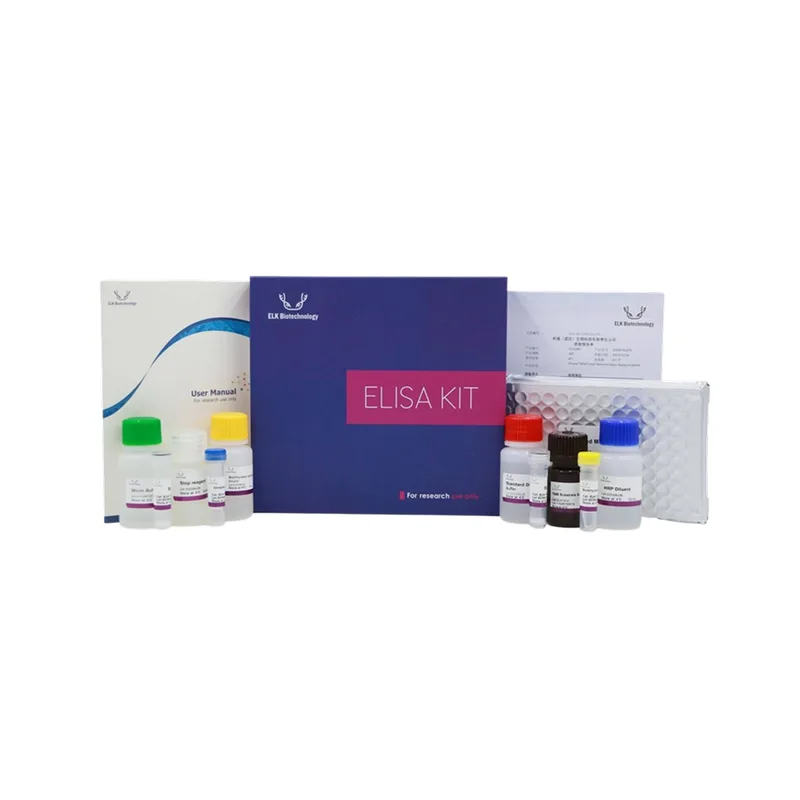
ELK Biotechnology AR(Acetyl-K631) rabbit pAb
AR(Acetyl-K631) rabbit pAb는 인간, 마우스, 랫트의 안드로겐 수용체 아세틸화(K631) 부위를 인식하는 폴리클로날 항체입니다. Western Blot 및 ELISA에 적합하며, 고순도 IgG 형태로 제공됩니다. 핵과 세포질 내 AR 위치 연구에 유용합니다.
- 판매단위
- pk
카탈로그
2개 옵션 · 카탈로그 번호를 클릭하면 복사됩니다ELK Biotechnology · ELK Biotechnology AR(Acetyl-K631) rabbit pAb
제품 개요
제품명: AR(Acetyl-K631) rabbit pAb
공급업체: ELK Biotechnology
안드로겐 수용체(AR)는 스테로이드 호르몬 활성화 전사인자로서, 핵 내에서 유전자 발현을 조절합니다. 본 항체는 인간 AR 단백질의 K631 아세틸화 부위를 인식하도록 제작된 폴리클로날 항체입니다.
제품 특성
| 항목 | 내용 |
|---|---|
| Product name | AR(Acetyl-K631) rabbit pAb |
| Alternative Names | Androgen receptor (Dihydrotestosterone receptor), Nuclear receptor subfamily 3 group C member 4 |
| Applications | WB; ELISA |
| Recommended Dilutions | Western Blot: 1/500 - 1/2000 ELISA: 1/20000 Other applications: Not yet tested |
| Immunogen | Synthesized acetyl peptide derived from human AR (AA range: K631) |
| Host | Rabbit |
| Storage | -20°C, 1 year |
| Clonality | Polyclonal |
| Isotype | IgG |
| Concentration | 1 mg/ml |
| GeneID (Human) | 367 |
| Human Swiss-Prot No. | P10275 |
| Species Reactivity | Human: K631; Mouse: K610; Rat: K613 |
| Cellular Localization | Nucleus, Cytoplasm. Detected at promoter of target genes (PubMed:25091737). Predominantly cytoplasmic in unligated form but translocates to nucleus upon ligand binding. Can also translocate in unligated form in presence of RACK1. |
Background
The androgen receptor (AR) gene spans over 90 kb and encodes a protein containing three major functional domains: the N-terminal domain, DNA-binding domain, and androgen-binding domain. AR acts as a steroid hormone-activated transcription factor. Upon ligand binding, it dissociates from accessory proteins, translocates into the nucleus, dimerizes, and activates transcription of androgen-responsive genes.
This gene includes two polymorphic trinucleotide repeat regions encoding polyglutamine and polyglycine tracts within the N-terminal transactivation domain. Expansion of the polyglutamine tract (from 9–34 to 38–62 repeats) causes spinal bulbar muscular atrophy (Kennedy disease). Mutations in this gene are associated with complete androgen insensitivity (CAIS). Two alternatively spliced variants encoding distinct isoforms are known.
ELK Biotechnology 상품 둘러보기
전체보기
문의
0개 · 배송·재고 문의는 실시간 상담이 빠릅니다아직 등록된 문의가 없어요.