

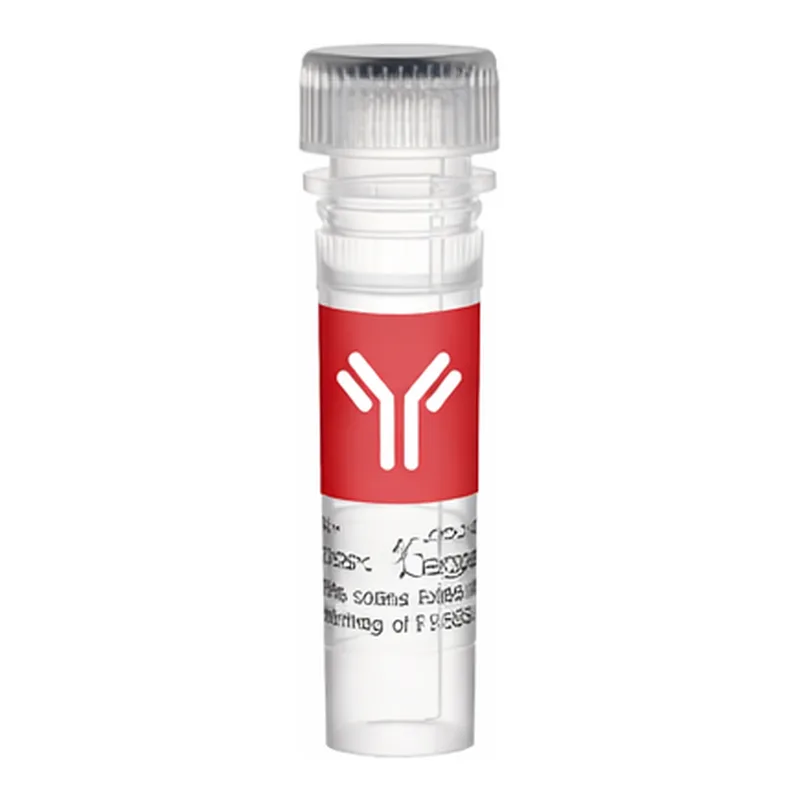
Thermo Fisher Scientific Enapotamab Recombinant Human Monoclonal Antibody
Enapotamab은 인간 AXL을 표적으로 하는 재조합 인간 단일클론 항체로, ELISA 등 다양한 연구 응용에 적합합니다. CHO 세포에서 발현되며, Protein A로 정제된 고순도 액상 형태입니다. 항염증 반응 및 세포 신호 연구에 유용하며, 연구용으로만 사용됩니다.
- 판매단위
- pk
카탈로그
1개 옵션 · 카탈로그 번호를 클릭하면 복사됩니다Thermo Fisher Scientific · Thermo Fisher Scientific Enapotamab Recombinant Human Monoclonal Antibody
Thermo Fisher Scientific Enapotamab Recombinant Human Monoclonal Antibody
Applications
- ELISA (Assay-dependent)
Product Specifications
| 항목 | 내용 |
|---|---|
| Species Reactivity | Human |
| Host / Isotype | Human / IgG1, kappa |
| Expression System | CHO cells |
| Class | Recombinant Monoclonal |
| Type | Antibody |
| Immunogen | Human AXL |
| Conjugate | Unconjugated |
| Form | Liquid |
| Concentration | 1.13 mg/mL |
| Purification | Protein A |
| Storage Buffer | PBS, pH 7.4 |
| Contains | No preservative |
| Storage Conditions | -20°C, Avoid Freeze/Thaw Cycles |
| Shipping Conditions | Ambient (domestic); Wet ice (international) |
| RRID | AB_2911344 |
Product Specific Information
- Endotoxin level: < 0.01 EU/µg (LAL method)
- Use a manual defrost freezer and avoid repeated freeze-thaw cycles.
- Store at 2–8°C for up to one week.
- Store at -20 to -80°C for up to twelve months from date of receipt.
Target Information
Enapotamab은 AXL을 표적으로 하는 바이오시밀러로, AXL은 TAM 수용체 패밀리(MerTK, TYRO3 포함)의 일원입니다.
AXL은 단백질 키나아제 활성을 가지며, 리간드 결합 시 이합체화 및 자가 인산화로 활성화됩니다.
Protein S와 GAS6에 의해 유도되는 AXL 신호는 SOCS-1 및 SOCS-3를 통해 항염증 경로를 활성화하여 TLR 및 사이토카인 신호를 억제합니다.
이로 인해 대식세포와 수지상세포의 염증 반응이 감소하며, TAM 수용체는 또한 세포사멸세포의 식세포작용에 관여합니다.
TAM 수용체 결핍 생쥐는 세포사멸세포 제거 실패로 인한 퇴행성 및 자가면역성 표현형(루푸스 유사)을 보입니다.
또한 AXL은 필로바이러스의 잠재적 침입 수용체로 작용할 수 있으며, Siglec 6+/Axl+ 수지상세포 아형의 표지자로도 사용됩니다.
AXL의 세포 발현은 LPS나 poly I:C 같은 TLR 리간드에 의해 증가하며, 용해성 형태는 막형 AXL의 단백질분해 절단으로 생성됩니다.
혈장 내 AXL 농도 상승은 염증 및 암의 바이오마커로 활용될 수 있습니다.
For Research Use Only. Not for use in diagnostic procedures. Not for resale without express authorization.
Thermo Fisher Scientific 상품 둘러보기
전체보기
문의
0개 · 배송·재고 문의는 실시간 상담이 빠릅니다아직 등록된 문의가 없어요.