

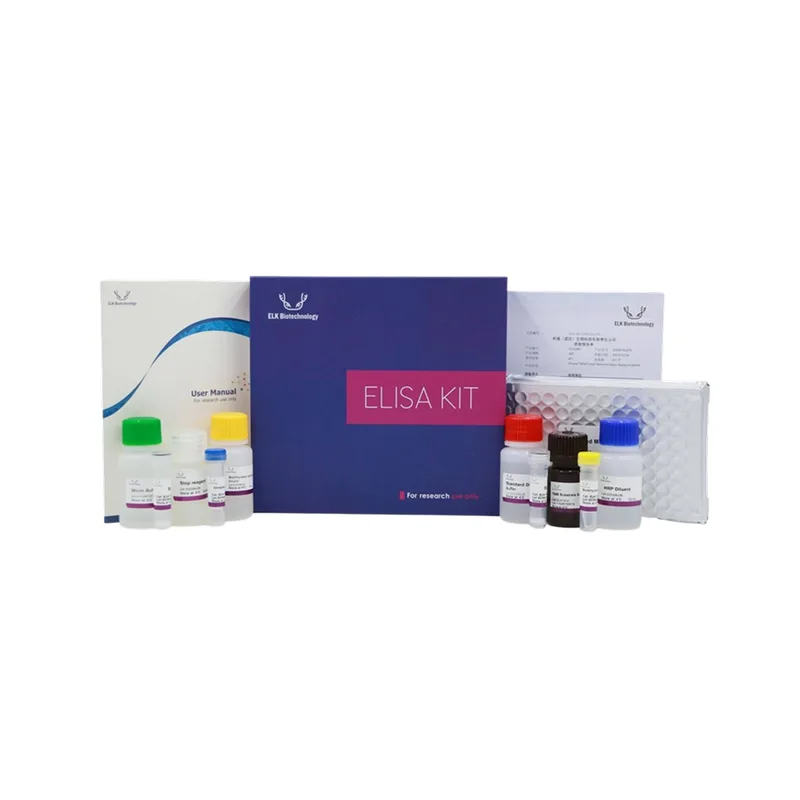
ELK Biotechnology ATP5G2 rabbit pAb
ATP5G2 단백질을 인식하는 토끼 폴리클로날 항체로, WB, IHC, IF, ELISA 등에 사용 가능. 인간, 쥐, 생쥐 반응성. 미토콘드리아 ATP 합성효소 관련 연구에 적합. -20°C에서 1년 보관 가능.
- 카탈로그번호
- ES6554-xxxxx (2개 옵션)
- 판매단위
- pk
카탈로그
2개 옵션 · 카탈로그 번호를 클릭하면 복사됩니다ELK Biotechnology · ELK Biotechnology ATP5G2 rabbit pAb
제품명
ATP5G2 rabbit pAb
공급업체
ELK Biotechnology
제품 개요
ATP5G2 단백질을 인식하는 토끼 유래 폴리클로날 항체입니다. 미토콘드리아 ATP 합성효소의 하위 단위 연구에 활용되며, 다양한 면역실험에 적용 가능합니다.
제품 스펙
| 항목 | 내용 |
|---|---|
| Product Name | ATP5G2 rabbit pAb |
| Alternative Names | ATP5G2; PSEC0033; ATP synthase lipid-binding protein; mitochondrial; ATP synthase proteolipid P2; ATPase protein 9; ATPase subunit c |
| Applications | WB; IHC; IF; ELISA |
| Recommended Dilutions | IHC: 1/100–1/300; ELISA: 1/40000 (other applications not yet tested) |
| Immunogen | Synthesized peptide derived from human ATP5G2 (AA range: 1–50) |
| Host | Rabbit |
| Storage | -20°C / 1 year |
| Clonality | Polyclonal |
| Isotype | IgG |
| Concentration | 1 mg/ml |
| GeneID (Human) | 517 |
| Human Swiss-Prot No | Q06055 |
| Cellular Localization | Mitochondrion membrane; Multi-pass membrane protein |
| Species Reactivity | Human; Rat; Mouse |
Background
This gene encodes a subunit of mitochondrial ATP synthase. Mitochondrial ATP synthase catalyzes ATP synthesis utilizing an electrochemical gradient of protons across the inner membrane during oxidative phosphorylation. ATP synthase is composed of two linked multi-subunit complexes: the soluble catalytic core (F1) and the membrane-spanning component (Fo), which forms the proton channel. The catalytic portion consists of five different subunits (alpha, beta, gamma, delta, epsilon) assembled with a stoichiometry of 3 alpha, 3 beta, and single representatives of gamma, delta, and epsilon subunits. The proton channel likely has nine subunits (a, b, c, d, e, f, g, F6, and 8). There are three separate genes encoding subunit c of the proton channel, specifying precursors with different import sequences but identical mature proteins.
ELK Biotechnology 상품 둘러보기
전체보기
문의
0개 · 배송·재고 문의는 실시간 상담이 빠릅니다아직 등록된 문의가 없어요.