

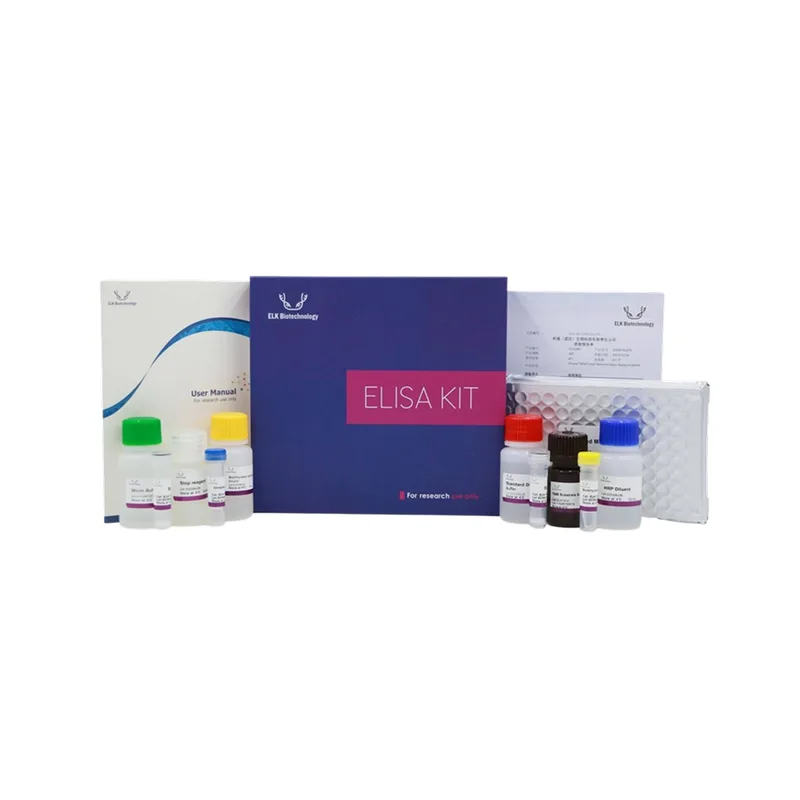
ELK Biotechnology Abl1/2 (phospho Tyr393/439) rabbit pAb
Abl1/2 (phospho Tyr393/439) rabbit polyclonal antibody for WB, IHC, IF, ELISA. Recognizes phosphorylated Abl1/2 proteins involved in cell signaling and oncogenesis. High specificity, stable at -20°C for 1 year, suitable for human, mouse, and monkey sam...
- 판매단위
- pk
카탈로그
2개 옵션 · 카탈로그 번호를 클릭하면 복사됩니다ELK Biotechnology · ELK Biotechnology Abl1/2 (phospho Tyr393/439) rabbit pAb
제품명
Abl1/2 (phospho Tyr393/439) rabbit pAb
기본 정보
| 항목 | 내용 |
|---|---|
| Product name | Abl1/2 (phospho Tyr393/439) rabbit pAb |
| Alternative Names | ABL1; ABL; JTK7; Tyrosine-protein kinase ABL1; Abelson murine leukemia viral oncogene homolog 1; Abelson tyrosine-protein kinase 1; Proto-oncogene c-Abl; p150; ABL2; ABLL; ARG; Abelson tyrosine-protein kinase 2; Abelson murine leukemia viral oncogene homolog 2 |
| Applications | WB; IHC; IF; ELISA |
| Recommended Dilutions | Western Blot: 1/500 - 1/2000 Immunohistochemistry: 1/100 - 1/300 ELISA: 1/10000 Not yet tested in other applications |
| Immunogen | Synthesized peptide derived from human Abl around the phosphorylation site of Tyr412 (AA range: 361–410) |
| Host | Rabbit |
| Storage | -20°C / 1 year |
| Clonality | Polyclonal |
| Isotype | IgG |
| Concentration | 1 mg/ml |
| Observed Band | 125 kDa (200 kDa BCR-ABL complex) |
| GeneID (Human) | 25 / 27 |
| Human Swiss-Prot No | P00519 / P42684 |
| Species Reactivity | Human; Mouse; Monkey |
세포 내 위치 (Cellular Localization)
Cytoplasm, cytoskeleton, nucleus, mitochondrion.
Shuttles between the nucleus and cytoplasm depending on environmental signals.
Sequestered into the cytoplasm through interaction with 14-3-3 proteins.
Localizes to mitochondria in response to oxidative stress (By similarity).
Isoform IB: Nuclear membrane; lipid-anchor. The myristoylated c-ABL protein is reported to be nuclear.
배경 (Background)
This gene is a proto-oncogene encoding a protein tyrosine kinase involved in various cellular processes, including cell division, adhesion, differentiation, and stress response.
Its activity is negatively regulated by the SH3 domain; deletion of this region results in oncogenic activation.
The protein has DNA-binding activity regulated by CDC2-mediated phosphorylation, suggesting a role in the cell cycle.
This gene is known to fuse with partner genes in leukemias, notably the t(9;22) translocation forming the BCR-ABL fusion.
Alternative splicing produces two transcript variants with distinct first exons spliced to common downstream exons.
ELK Biotechnology 상품 둘러보기
전체보기
문의
0개 · 배송·재고 문의는 실시간 상담이 빠릅니다아직 등록된 문의가 없어요.