

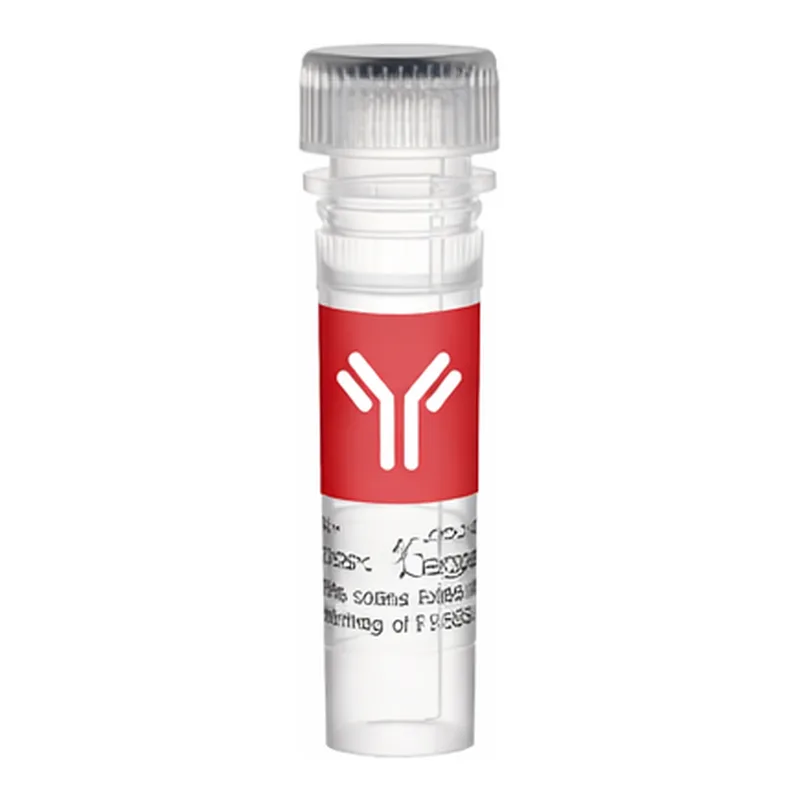
Thermo Fisher Scientific Monocyte Chemotactic Protein 2 (MCP2)/CCL8 Monoclonal Antibody (CCL8/3312)
인체 MCP2/CCL8 단백질을 인식하는 Mouse IgG2b 단클론 항체로, IHC(P), Peptide Array, Immunoelectrophoresis 등 다양한 분석에 사용 가능. 고순도 Protein A/G 정제, 24개월 안정성, 염증 및 면역반응 연구에 적합.
- 판매단위
- pk
카탈로그
1개 옵션 · 카탈로그 번호를 클릭하면 복사됩니다Thermo Fisher Scientific · Thermo Fisher Scientific Monocyte Chemotactic Protein 2 (MCP2)/CCL8 Monoclonal Antibody (CCL8/3312)
Applications
Immunohistochemistry (Paraffin) (IHC (P))
- Tested Dilution: 1–2 µg/mL
Peptide Array (Array)
- Tested Dilution: Assay-dependent
Immunoelectrophoresis (IE)
- Tested Dilution: Assay-dependent
Product Specifications
| 항목 | 내용 |
|---|---|
| Species Reactivity | Human |
| Host / Isotype | Mouse / IgG2b, kappa |
| Class | Monoclonal |
| Type | Antibody |
| Clone | CCL8/3312 |
| Immunogen | Human recombinant MCP2 / CCL8 protein fragment (around aa24–98) |
| Conjugate | Unconjugated |
| Form | Liquid |
| Concentration | 200 µg/mL |
| Purification | Protein A/G |
| Storage Buffer | PBS with 0.05% BSA |
| Contains | 0.05% sodium azide |
| Storage Conditions | 4°C |
| Shipping Conditions | Ambient (domestic); Wet ice (international) |
Product Specific Information
- Antibody is stable for 24 months.
- Positive Control: Human small intestine, spleen, or adrenal gland tissue.
- Cellular Localization: Secreted.
- Specificity Comments:
This antimicrobial gene is one of several chemokine genes clustered on the q-arm of chromosome 17. Chemokines form a superfamily of secreted proteins involved in immunoregulatory and inflammatory processes. The superfamily is divided into four subfamilies based on the arrangement of N-terminal cysteine residues of the mature peptide. This chemokine is a member of the CC subfamily characterized by two adjacent cysteine residues. This cytokine displays chemotactic activity for monocytes, lymphocytes, basophils, and eosinophils. By recruiting leukocytes to sites of inflammation, this cytokine may contribute to tumor-associated leukocyte infiltration and to the antiviral state against HIV infection.
Target Information
This antimicrobial gene is one of several chemokine genes clustered on the q-arm of chromosome 17. Chemokines form a superfamily of secreted proteins involved in immunoregulatory and inflammatory processes. The superfamily is divided into four subfamilies based on the arrangement of N-terminal cysteine residues of the mature peptide. This chemokine is a member of the CC subfamily characterized by two adjacent cysteine residues. This cytokine displays chemotactic activity for monocytes, lymphocytes, basophils, and eosinophils. By recruiting leukocytes to sites of inflammation, this cytokine may contribute to tumor-associated leukocyte infiltration and to the antiviral state against HIV infection.
For Research Use Only. Not for use in diagnostic procedures. Not for resale without express authorization.
제품 이미지
(이미지: 6355-MSM2-P1_CCL8_MCP2_P80075-1_House_mouse.svg)
(이미지: 6355-MSM2-P1_CCL8_MCP2_P80075-1_House_mouse_PDP.jpeg)
Thermo Fisher Scientific 상품 둘러보기
전체보기

문의
0개 · 배송·재고 문의는 실시간 상담이 빠릅니다아직 등록된 문의가 없어요.