

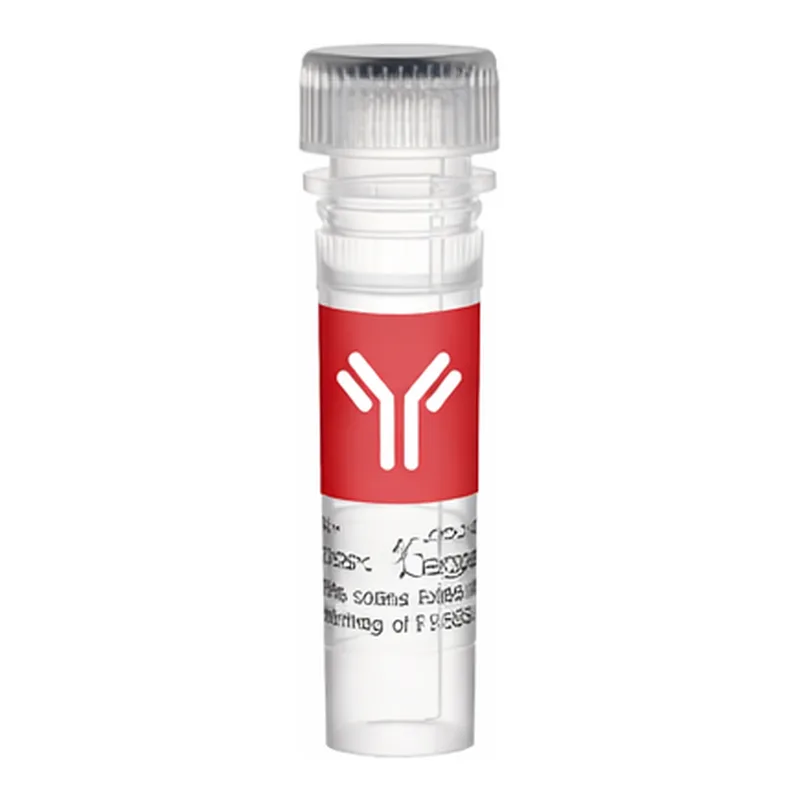
Thermo Fisher Scientific TSPAN8 Polyclonal Antibody
Rabbit polyclonal antibody targeting human TSPAN8 protein. Validated for WB and ICC/IF applications. Detects endogenous TSPAN8 involved in cancer-related signal transduction. Supplied as liquid, unconjugated, affinity-purified, for research use only.
- 판매단위
- pk
카탈로그
1개 옵션 · 카탈로그 번호를 클릭하면 복사됩니다Thermo Fisher Scientific · Thermo Fisher Scientific TSPAN8 Polyclonal Antibody
Applications and Tested Dilutions
| Application | Tested Dilution |
|---|---|
| Western Blot (WB) | 1:500–1:3,000 |
| Immunocytochemistry (ICC/IF) | 1:100–1:500 |
Product Specifications
| Specification | Description |
|---|---|
| Species Reactivity | Human |
| Host / Isotype | Rabbit / IgG |
| Class | Polyclonal |
| Type | Antibody |
| Immunogen | A synthesized peptide derived from human TSPAN8 (Accession P19075), corresponding to amino acid residues F109–A159 |
| Conjugate | Unconjugated |
| Form | Liquid |
| Concentration | 1 mg/mL |
| Purification | Affinity chromatography |
| Storage Buffer | PBS, pH 7.4, with 50% glycerol |
| Contains | 0.02% sodium azide |
| Storage Conditions | −20°C |
| Shipping Conditions | Wet ice |
| RRID | AB_2818147 |
Product Specific Information
Antibody detects endogenous levels of total TSPAN8.
Target Information
TSPAN8 (tetraspanin 8), also known as TM4SF3 or CO-029, is a 237 amino acid multi-pass membrane protein belonging to the tetraspanin family. It plays a role in signal transduction influencing cell development, activation, growth, and motility. Localized to the cell membrane, TSPAN8 is expressed in colon, gastric, renal, and pancreatic cancers, suggesting its involvement in cancer formation and metastasis. The gene encoding TSPAN8 maps to human chromosome 12, which encodes over 1,100 genes and comprises approximately 4.5% of the human genome.
Usage Note
For Research Use Only. Not for use in diagnostic procedures. Not for resale without express authorization.
제품 이미지
(이미지 없음)
Thermo Fisher Scientific 상품 둘러보기
전체보기
문의
0개 · 배송·재고 문의는 실시간 상담이 빠릅니다아직 등록된 문의가 없어요.